Showing posts with label Covid-19. Show all posts

Tuesday, October 20, 2020

The greatest challenge of this era: Logistics of COVID-19 vaccines

 The greatest challenge of this era: Logistics of COVID-19 vaccines

COVID-19, a virus orders of magnitude smaller than a grain of dust, has turned everyday life on earth into something deeply unknown. In the ten or so months after it first appeared, the epidemic settled at a constant rate of killing 5,000 people per day, or almost a million. The global economy has wreaked havoc, plunging the global into the worst economic recession since World War Two. Potentially, we are reaching the beginning of the end, meaning we may be at the end of the middle now. We are possibly far from halfway through the pandemic in terms of time, but the gradual deterioration in dreadfulness is potentially on the horizon. The culmination of this epidemic will take much longer than the beginning. This is because there is a vaccine coming. There has been a time of uncertainty previously as to whether a successful vaccine will be made, which is not a sure shot, but all signs currently show that it is indeed coming.

Right now, in September 2020, the late-October, early-November timeline is the focus of all attention. This is the first possible moment that any of the leading vaccines, from large manufactures such as AstraZeneca, Pfizer, and Moderna, may be subject to regulatory scrutiny. If all the details confidently show that the vaccine has an appropriate level of safety and effectiveness experts say that having a vaccine in 2020 is a less-than-long-shot possibility. However, it is almost certain that you will not be injected by a COVID-19 vaccine in the year 2020.

It can be described as the most challenging and consequential single logistical undertaking ever to get the majority of the world's population vaccinated. The stakes were never higher, but the challenge was never greater either.
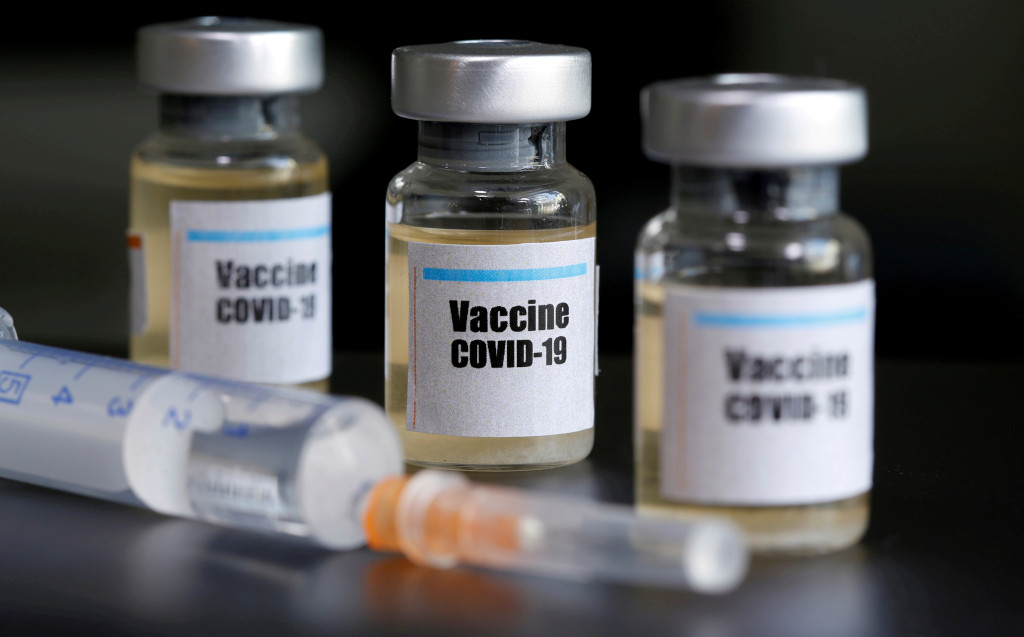
It's a problem of scale, first and foremost. It is not difficult to ship and administer one vaccine to one person, but to ship and administer 5 billion vaccines to 5 billion people is. That's because our world's logistics network doesn't have enough space to do that. Making it much harder, depending on the latest leading candidates, two doses offered 21 or 28 days apart would be needed for the first big vaccine to be accepted. That doubles the challenge. Distributing 10 or more billion doses of a vaccine would be difficult enough in normal times, but these are far from normal times.

With international travel all but non-existent, more than 90 percent of passenger airlines have significantly decreased their international route networks. Today, this is a problem since about 50% of pharmaceuticals are usually delivered in the passenger aircraft's belly-hold rather than on dedicated freighters. Total cargo capacity is about 30 percent down with minimal passenger operation, while cargo demand is just about 15 percent down, meaning there is still a supply shortage. This has led to existing dedicated freighter aircraft being used more, additional dedicated freighters coming into service, but still, due to constrained supply, a dramatic increase in shipping costs.

Pharmaceutical producers had to come up with different techniques to export their products before the COVID vaccine reached the global logistics network, such as flying their product to where shipping costs are cheaper and delivering them to their ultimate destination or chartering private planes and shippers were willing to scale up fairly for that, but there's one basic explanation why it won't be easy Vaccines are sensitive to temperature. Most of them have to be stored in a highly precise, climate-controlled environment to stay safe and effective. So, the cold chain is the supply chain suited to shipping goods that needed to be kept cold or frozen, such as chemicals, and pharmaceuticals. The trouble with the cold chain is that everything used must be specialised, each having the origin and the final destination to have the equipment to hold them at the specified temperature. Both solutions are difficult and complexities compounded by other complexities are what make it a real logistical challenge.

A thermal requirement like it is an entirely new ball game, and it ensures that only a portion of the cold chain infrastructure, which is already a portion of the total logistics infrastructure, will be able to be included. Many hospitals do not even have facilities to hold a vaccine at such a temperature, beyond the problem of simply getting such a vaccine to a delivery centre. Part of the reason why this obstacle has come up is that traditionally, vaccines are thoroughly tested to determine what sort of storage and shipping conditions they can endure while still staying safe and effective.

Consequently, to repeat, now, a possible vaccine would only be able to be distributed to a subset of a subset of an already overloaded distribution network, to a subset of locations, and that would have to happen several billion times, but even the answers to these problems present additional challenges. For example, Pfizer, knowing that their vaccine's particular delivery criteria could limit its commercial success, has created a partial solution. This means that, hypothetically, the vaccine could be shipped through a more traditional logistics network. Upon arrival, it can only be opened twice per da. That means that a distribution site would need to accurately predict how many doses they would need in a given day before that day

They could only vaccinate five hundred people in ten days, even if shipping was instantaneous, meaning half their vaccines would go bad. To solve this problem, Pfizer is designing a smaller temperature-controlled package, but that means adding a slightly new form of distribution, which adds complexity, slowing down the operation.

In its scenario planning, the American CDC mapped out a distribution process for if both Pfizer and Moderna’s vaccines are approved and, if this happened, the Pfizer vaccine would be directed to only large distribution sites that would either have the facilities for ultra-cold storage.

The sequence of operations for distribution is another challenge that needs to be met. Coronavirus affects multiple individuals in various ways. This suggests that the first person in line should be the one who is most vulnerable to COVID-19 if we want a vaccine to save as many lives as possible, and the last person in line should be the one who is the least susceptible. One set of research modelled two scenarios—the first where, of the first 3 billion doses available, 50 high-income countries buy up 2 billion of them. The second was where the first 3 billion doses were distributed to countries proportionally based on their population, regardless of wealth. In this model, twice as many people died overall with the first scenario—the wealthy countries first scenario—than the equitable, proportional approach. However, for vaccination purposes, it is the least wealthy countries, arguably those that need the vaccine most, that are toughest to distribute to. Poor countries tend to have limited cold chain infrastructure, let alone normal logistics infrastructure, poorly-funded healthcare systems.

In prosperous nations such as the United States, the delivery and administration of a sophisticated vaccine such as Pfizer's would always be tough enough. With assurance, a day's delay will lead to more death and despair. The manufacturers are working as fast as they can, they are already producing millions of doses of their vaccines before they’re approved so they can be distributed as fast as possible, and regulatory agencies have been preparing for months for an unprecedentedly fast review process, so it is now truly down to every member of the global logistics network to save lives, many of those that will be involved, especially once we get to wide-scale distribution, will be companies, not governments or nonprofits, and for them, this presents a massive business opportunity.

As well as the positive prospects for public relations. To be able to manage more of the rise in demand, DHL and FedEx are currently dramatically upgrading their cold-chain systems, while other lesser-known logistics firms are also. Ultimately, however, finding someone in-the-know who does not admit that shipping is going to be a bottleneck is challenging. This will come down to making sure that as much planning work as possible is done now before the vaccine is approved so that distribution can happen as fast as possible.

When that does happen? Now is the time to work out how the vaccine can be distributed and when. If you are a good, comparatively young person who thinks selfishly, the delivery process should take better care of you, because you are at the back of the line. If we can make an effort now to organise and train for this, to build a framework that directs people by obligation rather than money, we will at least realise that if only the vaccine came to them sooner, no lives could have been lost. In facing what is the biggest global obstacle of this generation, hopefully.


References:

https://blogs.worldbank.org/opendata/understanding-depth-2020-global-recession-5-charts

https://www.bloomberg.com/news/articles/2020-07-25/the-supply-chain-to-save-the-world-is-unprepared-for-a-vaccine

https://www.iata.org/en/iata-repository/publications/economic-reports/air-cargo-markets-july-update/

https://www.bloomberg.com/news/articles/2020-07-25/the-supply-chain-to-save-the-world-is-unprepared-for-a-vaccine


Sunday, October 18, 2020

How can Supply-Chain recovers from pandemic situations


This is Vembu Raj T, pursuing my MBA second year in Amrita School of Business, Coimbatore. Today’s my blog is on topic “How can Supply-Chain recovers from pandemic situations”. From this blog we would know about the Steps now taken to mitigate the effects of coronavirus supply chains will also create resilience against things in future.

Businesses need to react at once on several fronts: while striving to protect the safety of their staff, they must also safeguard their organizational sustainability, now increasingly under threat from a historic supply chain shock. Many organizations are able to mobilize quickly and set up processes for crisis management, preferably in the form of a nerve center. Naturally, the usual emphasis is short-term. How will supply-chain leaders also plan and develop the resilience that will see them to the other side in the medium and long term?

  • Establish transparency in multi-stakeholder supply chains, draw up a list of essential products, decide the source of supply and identify alternative sources. 
  • Estimate the available inventory along the supply chain for use as a bridge to keep production going and allow consumers to deliver, including replacement parts and after-sales stock.
  • Evaluate reasonable final-customer demand and respond to (or contain, where possible) customer shortage-buying actions.
  • Optimize the ability of production and distribution to ensure the safety of workers, such as by providing personal protective equipment (PPE) and collaborating with contact teams to share levels of infection risk and work-from - home choices. These measures would make it possible for leaders to consider current and potential levels of capacity in both labor and materials.
  • Identify and secure logistics capacities, estimate and accelerate capacity, where possible, and, where necessary, be versatile in the mode of transport.
  • Manage cash and net working capital by conducting stress tests to understand when a financial effect will begin to be generated by supply chain problems.

Saturday, October 17, 2020

Does COVID-19 effects is Gasoline affects Supply chain.


As the outbreak of the COVID-19 the virus moved China into a lockdown; and, as the main importer of oil and gas, demand for factories and transport decreased. The oil demand gradually fell, further reducing the price of oil. The Organisation of Petroleum Exporting Countries (OPEC) has called a conference to urge leading oil producers to cut oil supply by an additional 1.5 million barrels to resolve the crisis. OPEC demanded that the non-participating countries comply with the same guidance, but a few countries continued to extract oil at the same level of volume. With more countries declaring lockdowns to absorb COVID-19 spread, in comparison to a sharp decrease in requirements, the production rate remained stable, resulting in a big supply and demand gap in the Oil & Gas industry.

Upstream (refers to anything related to oil and gas exploration), Midstream refers to anything needed to transport and store crude oil and natural gas before it is refined and processed), and Downstream (refers to anything related to converting crude oil and natural gas into finished products) can be narrowly separated into three main sections. Since many major oil producers, primarily in Saudi Arabia and Russia, are not reducing their oil output due to the collapse of the OPEC summit talks, the key downstream supply chain effect is the availability of resources and personnel to keep production activities and associated maintenance running by lockdowns and other containment measures. In such a scenario, solutions such as IoT / AR-VR allowed Remote Diagnostics and Tracking and Preventive Maintenance using Advanced Al models may have been used optimally to decrease reliance on the physical presence of staff in production lines and to decrease the probability of system breakdown at critical periods.

The big oil refineries have not started purchasing oil from the discovery firms, close to the oil production situation. However, freight carriers such as transcontinental tankers, rail tank cars, tank trucks, etc. are being queued up due to the immense market shortage in the downstream regions of the oil and gas supply chain. The problem in this pandemic is compounded by maintaining track of logistics, monitoring oil spillage, and pilferage from containers. There may be some options focused on new technology that could be deployed to alleviate the situation with short-term and long-term gains. External surveillance and health monitoring of containers can include ready warnings for oil spillage and pilferage, and comprehensive fleet maintenance can regulate transportation modes that are now overused. The big oil refineries have not started purchasing oil from the discovery firms, close to the oil production situation. However, freight carriers such as transcontinental tankers, rail tank cars, tank trucks, etc. are being queued up due to the immense market shortage in the downstream regions of the oil and gas supply chain. The problem in this pandemic is compounded by maintaining track of logistics, monitoring oil spillage, and pilferage from containers.

There may be some options focused on new technology that could be deployed to alleviate the situation with short-term and long-term gains. External surveillance and health monitoring of containers can include ready warnings for oil spillage and pilferage, and comprehensive fleet maintenance can regulate transportation modes that are now overused.  Due to the COVID-19 scenario, the downstream supply chain is potentially the hardest hit. But, with assembly lines processing oil at the same rate as before, the transition from midstream to downstream retail room creates a significant bottleneck in the entire supply chain. With the lockout of COVID-19 lifted in due time, this segment will almost immediately undergo a huge rise in demand. This would need a very strong capacity for procurement and transport preparation to satisfy those needs even though the procurement is overstocked.

Plans to optimize transport utilization, smart demand-supply match, etc., are measures that may be useful to alleviate the situation. Digital systems may be configured to use sophisticated machine learning algorithms to separate end-users depending on the expected rise in demand, e.g. the travel and hospitality industries are likely to rebound slowly even with the lifting of the COVID-19 lockout, and therefore will have fewer energy.

References:

https://energy.economictimes.indiatimes.com/energy-speak/will-the-oil-industry-survive-covid-19-effects/4125

https://www.worldbank.org/en/region/mena/brief/coping-with-a-dual-shock-coronavirus-covid-19-and-oil-prices

https://www2.deloitte.com/global/en/pages/about-deloitte/articles/covid-19/covid-19-s-impact-on-oil--gas--and-chemical-organizations.html

The COVID-19 effect in Soft Drinks Supply chain


The global scope of the coronavirus (COVID-19) pandemic and its maximum effects are not yet apparent. Security and protection of personnel, manufacturers, retail associates, and the general public remains the top targets for consumer packaged products (CPG). Over time, businesses working with the manufacturing, storage, and delivery of raw food products, including processed meals and frozen foods, along with alcoholic and non-alcoholic drinks, are part of the food & beverage business.

Before the COVID-19 pandemic, the key reasons for the rise of the food & drinks industry include the rise in the number of on-the-go customers and the increasing adoption of ready-to-eat food. Besides, other growth-enhancing influences of the food & beverage industry have been gradually growing population and per capita income and evolving lifestyle. The shutdowns of the restaurants and other seating areas are, however, the main reasons impacting the food & beverage industry since the pandemic. The global scope of the coronavirus (COVID-19) pandemic and its maximum effects are not yet apparent. Security and protection of personnel, manufacturers, retail associates, and the general public remain top targets for consumer packaged products (CPG). Over time, the pandemic would have far-reaching implications for the U.S. food and beverage sector, possibly re-aligning perceptions towards public health and wellness, reshaping food market priorities, and rising market sensitivity as recessionary effects intensify.

Due to the surge in stock-up grocery demand, particularly for staple goods such as bottled water, major supply chain disruption creates an immediate short-term challenge. In keeping high-demand goods available on the shelves, the direct-store-delivery model used by most major retail soda bottlers in the United States can have a logistical advantage. The number of retail drinks will likely rise in the short term as shoppers fill their pantries with staple items such as water, juice, coffee, tea, and carbonates. Consumers can use current supplies until shelter-in-place and other public assembly limits are finally abolished. As a result, this transient development trajectory will undoubtedly stabilize, negatively affecting the success of the segment in the coming weeks and months.

This involves offline food stores that are shut down in certain countries, restaurants, and cafes, while online food orders are available. Moreover, as customers hurry to refill the pantries, the processed food and beverage sectors are seeing an upsurge in demand, such as shelf-stable foods and drinks like milk products. In almost all countries, including North America, Europe, Asia-Pacific, and the rest of the world, the novel COVID-19 has shaped the food & beverage industry. Among others, Walmart, Instacart, and Amazon have made major investments in capacity for distribution and shipping. In the wake of the COVID-19 pandemic, the pace of food (and beverage) e-commerce adoption in the U.S. could emerge as a permanent improvement.

Humanitarian relief efforts and helping customers meet the food orders of needy, isolated, or quarantined people should be prioritized for heavily affected areas. In the short term, the emphasis must also be on overcoming logistics problems that hinder meeting demand for vital goods during the pandemic. For the near future, home delivery and click-and-collect pickup of drinks and other retail goods will remain in high demand, and the potential for online distribution must be extended (probably with long-term effects). Efforts can be made in newly hit areas to help stores efficiently restock goods following increasing demand and stockpiling.

References:

https://www.businesswire.com/news/home/20200415005321/en/Global-Food-Beverages-Industry-and-the-Effects-of-COVID-19---Analysis-of-Regional-Regulations-and-Other-Government-Policies---ResearchAndMarkets.com

https://www.weforum.org/agenda/2020/04/beer-may-lose-its-fizz-as-co2-supplies-go-flat-during-pandemic/

https://apnews.com/press-release/accesswire/cc6f7f525759dc729c7f4522c447e799

India's supply chain success phase due to scrimmage with china & COVID.


    India seems to be working on the latest package of offers to lure businesses moving away from China, with businesses from Samsung Electronics Co. to assembly partners of Apple Inc. expressing interest in investing in the South Asian country. In March, the government of Prime Minister Narendra Modi proposed rewards to made niche businesses — electronics producers — liable for a payout of 4% -6% of their incremental revenue over the next five years. The result: about two dozen firms promised $1.5 billion in investments to set up the country's cell phone factories.Besides Samsung, Hon Hai Precision Industry Co., branded as Foxconn, Wistron Corp., and Pegatron Corp. are others who have shown interest. India has already provided similar offers to pharmaceutical firms and aims to include several industries under the scheme, which could include vehicles, textiles, and food manufacturing.


 Although companies have been aggressively trying to diversify supply chains during U.S.-China trade disputes and the coronavirus epidemic, despite the nation making it easier for companies to open shop, it has not yet converted into big profits for India. According to a recent survey by Standard Chartered Plc, Vietnam remains the most favored destination, followed by Cambodia, Myanmar, Bangladesh, and Thailand. One of the first ports to settle for closer inspection of Chinese imports was the Port of Chennai, a vital import center for automotive and technological products. Imported goods from India were also held back by Beijing in Hong Kong and Chinese customs in response. Tensions with China may also have a big effect on the pharmaceutical industry in India, which is the third-largest in the world by volume, accounting for 60 % of the world's overall exported drugs and medicines.

In terms of gradual investment in supply chains within the country over the medium term, there is a fair possibility for India to benefit. These projects seek to increase India's share of the gross domestic product in manufacturing. There is a risk for carriers to circumvent ports and, as a result, manufacturers with suppliers located in India and China can prepare inventories to ensure that production schedules can be fulfilled if port congestion continues and Chinese imports are subject to additional strict customs regulations or tariffs, the DHL report noted. The Economic Times claimed that Samsung plans to produce $40 billion worth of smartphones in India and could move a large part of its production from Vietnam and other nations, citing individuals it did not name. Samsung didn't respond to newspaper inquiries. According to analysts led by Neelkanth Mishra at Credit Suisse Group AG, the incentives would help bring an extra investment of $55 billion over five years, contributing 0.5 percent to India's economic performance. This could move an additional 10 percent of global smartphone demand to India in five years, most of it from China, they wrote in a study on Aug. 10. That complements Modi's target as part of his 'Make in India' policy to increase the share of manufacturing in the economy to 25 percent from the current approximately 15 percent. His government has now cut corporate taxes to one of the lowest in Asia, aiming to draw new investments in an economy that is heading for its first recession in over four decades this year.

References:

https://www.lloydsloadinglist.com/freight-directory/news/India-China-standoff-could-impact-global-supply-chains/76921.htm#.X4r9WdAzZPY

https://www.hindustantimes.com/business-news/china-s-loss-may-become-india-s-gain-in-shifting-supply-chains/story-1QP3CPqoYfjKOCw5ZQIrXL.html

https://www.india-briefing.com/news/covid-19-india-impact-supply-chain-china-19724.html/

Wednesday, October 14, 2020

COVAX - the best SC to be developed!!!


With the world economies suffering from the COVID Virus or as more commonly known by the Americans – The Wuhan Virus, the world has moved into a state of deglobalization. Countries have closed their borders; international flights have been grounded and the country leaders are talking about becoming self-sufficient.

Some countries have stopped the visas of other nationality people whereas some have increased the import duties to encourage the self-sufficiency and self-reliance concept.

It is not that these decisions were taken in a blink of the eye moment, but there were incidences which led to such decisions like the supply of faulty testing kits.

But the Questions that haunt us right now are: With the death tolls continuously rising and the economies crashing, will the countries continue to support deglobalization? What if one country achieves a breakthrough and all the other countries (Powerful, developed nations) are fighting with each other leave alone suppressing the under-developed and developing nations to get their hands on the magical life-saving formula? What would be the best way to save maximum number of lives by ensuring “THE MOST RESPONSIVE SC TO DATE”?

From the data gathered by the WHO website, we understand that, there are currently 169 candidates in the list with 26 top contenders in their human trial phase.


Let us, for the sake of discussion, say that Russia’s SPUTNIK V is successful in making the vaccine, and it has a production capacity of 100,000 dozes per day. The population of the world is 7.8 Billion as per the data taken from google.com, by doing the basic calculations, we can see that it will take around 7800 days which is almost 215 years for each and every person on the face of Earth to be vaccinated, (assuming that only one manufacturer is present). It is obvious that the drug maker will increase its production over the time period and also the other drug makers in the world will try to imitate the formula and make similar drugs and the time might be reduced. Speaking very optimistically, and taking all the capacity enhancement procedures, it will at least take 50 years for 7.8 Billion People to get the vaccine.


Not having a properly designed SC, may lead to a World War III between the powerful nations who will try to save their people which will lead to further destruction rather than curbing it. It is therefore very important that the decision makers think about a unique, robust and most responsive supply chain and make the vaccine available around the globe in the least possible time.

The work for developing a COVAX (as the WHO calls it) is ongoing at an unprecedented speed. Some of the countries which are in the race are:

1.      Russia

2.      USA

3.      India

4.      China (with no one buying from it due to past experience)

5.      Germany


Another important factor is the shelf life of the vaccine and the conditions in which it has to be transported from the drug maker to billions of people around the globe. As per the field experts, the vaccine will have to be transported at 2 to 8oC, which is another feather in the hat of problems.

The suggestions from a logistics student perspective would be, the world leaders in logistics operations, to start building and investing to develop a supply chain that the world has never witnessed before. All the three modes; Land, Water and Air, should be used to the maximum capacity to transport the vaccine; in return, the drivers of this robust logistics system should be vaccinated first, so that they are motivated to help save the mankind.

Proper and directed decisions to be taken and all the contenders in the world should be connected initially to increase the production capacity, so that all the netizens of the world can be vaccinated at the earliest.


Sunday, September 27, 2020

Safety comes first..


During the unprecedented time because of the pandemic, many companies are not aware of the measures that needs to be taken in order to ensure the safety of their employees which ranges from providing personnel protection equipment, maintaining physical distance etc.

With the rapid spreading of Covid-19 and employees coming to work, many precautionary measures have been taken that has been considered as the new normal i.e checking temperature of each employee, practicing social distancing, monitoring occupancy levels, cleaning work stations. Along with this , the shifts of employees have also been adjusted in order to prevent too many people in the shop floor.

People have been looking into technology as well, for example, wristbands that vibrate to ensure social distancing, but at the same time, they are not that reliable also.

Monitoring occupancy levels:

Due to the rapid spread of Covid-19, a company called SICK has come up with a people counter sensor app using 3D sensors in order to ensure the occupancy level at workplaces are at the recommended levels.  This sensor does ensure privacy concerns are respected at the same time provide health and safety recommendations. This will help to effectively utilise space and maintain the required occupancy levels.

Maintaining physical distance:

SICK also has a method for reliable detection of people to ensure physical distance. It is with the help of LiDAR and trace and track technology from SICK, they could ensure the safety of everyone within the workplace. This helped to practise social distancing at the same time operating efficiently. This technology helped to create virtual walls  to form three-sided box around a workstation, this will be indicated by markings on the floor.

Tracking throughout the facility:

RFID tags are placed on the employees clothing or hat which will help to track where the worker is travelling. This data is later processed by the manufacturer. The tracker will help to identify and track everywhere any person went in the facility, what all they were in contact with and conduct effective contact tracing.


Sunday, September 6, 2020

The supply chain of vaccines


Since its discovery in December 2019, the COVID-19 pandemic is responsible for more than 26.9 M confirmed infections and over 880 K deaths. A vital race is on as humanity begins to adapt its response to the epidemic–a race to find, develop and deliver a potentially life-saving vaccine.

In order for a vaccine to successfully minimize or eradicate an infectious disease, the supply chain must function optimally to fulfill vital demand areas while still maintaining vaccine viability.

There are several factors that make a vaccine supply chain unique:

  • The Cold Chain: Most vaccines must be transported and stored in a constant cold chain of temperatures ranging from two to eight degrees Celsius – from manufacturing all the way through to the immunization of a patient. This places a strain on the delivery, particularly in the last mile, when vaccines are distributed to remote populations in countries with limited infrastructure and electricity.
  • Packaging: Decisions around single syringes versus multi-dose vials affect supply chain capacity.
  • Ancillary Products: Glass vials, stoppers, needles, syringes, raw materials, and more are all needed for successful administration of the vaccine.
  • Production Planning: The long production timelines and short shelf-lives require a combination of accurate demand forecasting and agile product planning.

Restricted storage capacity, particularly within the cold chain, can lead to waste if the inventory and need exceed the ability of the supply chain to transport a vaccine continuously from source to final destination. But limited storage space can also be offset in a health facility or warehouse by adjusting delivery frequency, direction, mode of transportation, or even facilitating vaccine distribution.

Sunday, August 30, 2020

The Future Group - Reliance Retail Deal

 India's Reliance Retail to acquire Future Group's units for $3.4 billion

Welcome Readers !

I am Sheerapthi Ramiya, 2nd Year MBA from Amrita School of Business, coming back with this week's read ! Hope my readers are doing well and I hope you enjoy :) 

This is hot news! The Future group has reached out to Reliance Retail to buy their business for an overall transaction value of Rs. 27,513 Crores! Future group owns well known brands such as Big Bazaar, Brand Factory, Buffalo, DJ&C, FBB, etc. The transaction takes place as a three-step deal:

-        All Listed Future Group companies to be merged into Future Enterprises Ltd.

-        Future Enterprises to transfer assets of retail and wholesale undertaking and logistics and warehousing business to Reliance Retail entities

-        Reliance Retail will also invest Rs. 2,800 crores for an up to 13% stake in Future Enterprises.


But why did Future Group sell out ?

The Kishore-Biyani founded Future group has been seeking funding support for several months as around Rs 15,000 crore is in debt to the company as well as substantial decrease in sales and cash flow on the account of pandemic and lockdown. The loss for Future Group was its excessive leverage. It did win a very small investment from Amazon Retail several months ago, however India's FDI (Foreign Direct Investment) rules restrict foreign ownership of multi-brand retail. This deal with Reliance Retail will avert any further financial crisis at the Future Group, which last averted a debt default at the minute. The Future Group deal is a big relief to banks like Bank of India, SBI, Axis Bank, Canara Bank and RBL Bank.

What in it for Reliance Retail ?

Reliance Retail runs several retail formats in the grocery, electronics and apparel space but it does not have a large reach as that of Future Group, especially in the grocery Business. With household retail brands like Big Bazaar, Fashion at Big Bazaar, Easy Day and Brand Factory going to Reliance, an in-house multi brand retail product will be obtained giving Reliance Industries an immediate edge in the retail market. The deal will lead to an stronger organised retail market giving Mukesh Ambani led Reliance Industries’ retail venture pole position in the close to over $700 billion retail sector in India. The deal will also add over 1,700 retail stores to Reliance's footprint of 10,900 stores across groceries, electronics and other formats. The deal gives a positive cash flow and will also make Reliance Retail become the largest grocery player in the country. 


What does this mean for Reliance Retail?

This deal includes - store front, warehousing and logistics. Future Groups loss is Reliance gain as it gets a readymade reach and supply chin built over the years and ready for further execution by Reliance. The execution in retail will be rolled out in months to come and also promise growth from an established platform. Access to Tier 2 and Tier 3 towns where the Future group has inherent presence in shall develop and build the overall franchise footprint in grocery, retail and lifestyle and other businesses. Over a period of time, warehousing and supply chain dynamics should aid in cost synergies and overall digitization of the Jiomart Platform. The opportunities to make a 360-degree presence through digital mediums, brick and mortar stores, supply chain backward operations should ensure Reliance Retail are able to take over the competition from global players. That's not all. The important part with the deal coming in is that they are not only acquiring the front-end stores but also the backend for retail, which is highly important because we will have the ability to earn a margin out of it unless we have a proper backend if we want to start a grocery business. Reliance doesn't have to only use warehouses, but can also use the available brick and mortar as small warehouses to strengthen their supply chain and logistics network. 


The Windup 

India's retail market is highly fragmented and dominated by corner stores or Kirana stores. However there is large headroom for the top 5 retailers to increase their market share from the current less than 5% to 10% - 12% in the next decade (BCG Report). Isha Ambani, Director, Reliance Retail Ventures says that the transaction will help in the evolution of modern retail in India. The will actively collaborate with small merchants and kiranas as well as large consumer brands to help grown momentum in the retail industry. This will help accelerate providing support to millions of small merchants in increasing their competitiveness and enhance their income during challenging times says the press release. 

We can see how Reliance is trying to grab every single opportunity, to strengthen its position in the retail sector with the purchase of Sri Kannan Departmental Stores a few months back which is a local departmental store in across Tamil Nadu, the Purchase of the leading retailers - Future Group Retail and collaborating with technological companies to gain a dominant position in the Indian Retail Landscape. With Reliance's introduction of Jiomart and the availability of a large network of warehouses and brick and mortar stores and also the backend suppliers, logistics and supply chain will be seamless and digitized while reducing the delivery time in the modern age of India. 

What are your thoughts about this ? Give your comments below :)

If you haven't check out my last week's read, which is about Chennai being self sufficient and self reliant during lockdown, click the link below !

https://logisticsmatters.blogspot.com/2020/08/will-chennai-become-self-sufficient-by.html


- Sheerapthi Ramiya
ASB, Coimbatore

Supply Chain Dominance of China

Supply Chain Dominance of China A “Made in China” label has always been problematic in the U.S. In the early years of globalization, compani...