Showing posts with label Inventory Management. Show all posts

Sunday, October 18, 2020

Inventory Management’s Future

Combining with the evolution of WMS user interface to take inventory management to a new level by allowing improved visibility and control. It takes both planning and execution. For decades, execution has relied on bar code data collection and wireless, system-directed material moves to exert better inventory control than paper-based processes.


The future as we speak for the inventory management include Real Time Location System (RLTS), Warehouse Management System (WMS).

RTLS solutions span multiple technologies, including ultrawideband (UWB) beacons, Bluetooth low energy (BLE) beacons, as well as more traditional active and passive radio frequency identification (RFID). These technologies have existed for years and have continued to evolve, including new types of tags and readers.

RLTS

Companies with supply chain operations may remember the high expectations around RFID in the early 2000s. A massive rollout of RFID didn’t materialize, though it has become increasingly used in retail stores to track high-value items like apparel.

This new era for RTLS is different. It’s more targeted and builds on advancements like UWB that can offer accuracy within 10 centimeters.

RTLS analytics are evolving beyond the question “where is my asset” in looking at operational adjustments. For example, if some perishable goods go out of temperature range, or a shipment of high-value goods is split during transit, analytics can point to the best adjustments.

WMS

WMS has long used wireless bar code scanning and system-directed activity to exert control over inventory, but there are holes in that visibility. Having lag time since the last scan, and users can make errors or run across inventory shortages. 


WMS solutions need to be better at dynamic inventory control. A good WMS remains the foundation for inventory control. WMS can improve accuracy by directing workers on what items that need to be picked or replenished look, and what the unit of measure or quantity should be. If we consider that how most picking errors tend to happen, it’s usually not about a worker being in the wrong place, but picking the wrong thing or the wrong unit of measure at the correct location Inventory accuracy has a lot to do with how good your WMS is at providing the right information contextually to the material handler.

Co-existence of RLTS & WMS

Most warehouses have good standard operating processes and WMS capabilities to drive inventory accuracy and movement transactionally through the facility, so there may not be a need for real-time monitoring of on-hand values in every location, RTLS plays nicely with bar codes, since RTLS tags are often deployed at a vehicle or container level, with bar code scans offering a way to confirm load details or associate a tagged asset with load contents. There can certainly be a happy intersection between the use of bar codes, passive RFID and RTLS. There is not going to be an overnight transition away from traditional scanning.

Happy Learning😀. Please share your valuable comments.

Tuesday, October 13, 2020

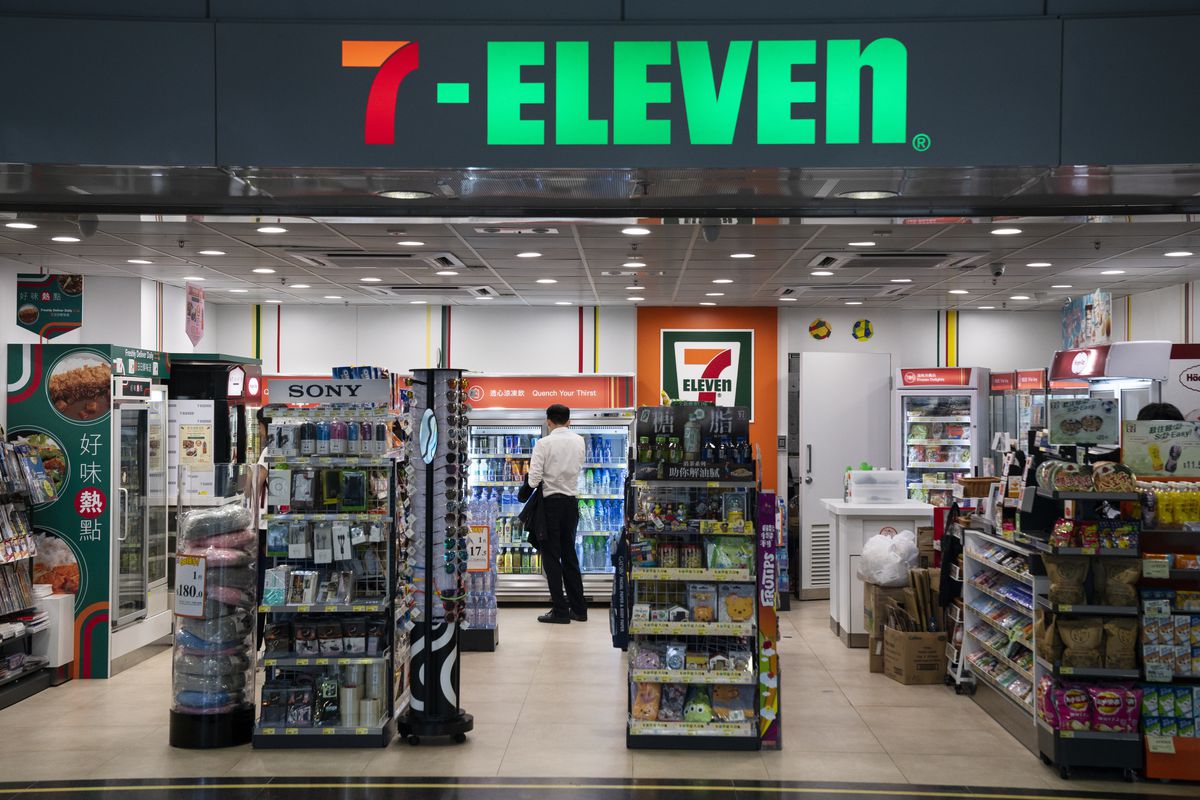
The Success Story of 7-ELEVEN

 Hello everyone.I am Madhumitha.M doing my second year MBA in Amrita School of Business.Welcome to my blog on topic "The success story of 7-ELEVEN".From this blog we know not only about information on industry but we also know about the supply chain management of the company.Hope you find interesting.

1.Network of the store

The success of the Seven-Eleven supermarket network is largely attributed to the nature and operation of its supply chain, and its commercial aim is to provide consumers with the goods they want when they need them. From a strategic point of view, the company's key goals are to seek a micro-balance between supply and demand across the geographical, seasonal and regular schedule. The location of the shop plays an irreplaceable role. The dominant tactic of SE is to open multiple outlets in a concentrated manner, thereby practically conquering the market it reaches. The organisation employs distinctive aspects of this approach in four major ways: economic distribution, brand recognition, competition entry avoidance, and increased quality in directing franchised stores.

2.Inventory Policy

There is a tradeoff between shipping and stock, and cutting prices on one raises spending on the other. Seven Eleven was able to brilliantly use the transport section to keep inventory close to empty. Stores are replenished at least three times a day and the need for safety stock was removed by this limited lead period. Seven-Eleven stores were allowed by the information system to help balance supply with demand.

For instance, traditional breakfast items are stored earlier during the day, and later in the evening, typical dinner items are stored. A store was able to convert shelf space to introduce new items by identifying slow or non-moving items, thus utilising full space utilisation. When a new product is launched, within the first three weeks, the decision to begin storing it is made.

3.Point of sales

The point of sales system makes it possible to track each merchandise sold in real time. To remove dead stock, each store strictly adheres to the scheme. For product growth, knowledge obtained by the POS framework is invaluable. Since the POS gathers data about clients. The cashiers can first scan the bar code and give the customers a quote as soon as a customer orders an item, the customers go to the cashier checkout. The cashier will input the amount paid by the clients after payment. They then click buttons above the POS, which is blue for men and pink for women, depending on their estimation of age and sex. After checkout, the data is transmitted to the mainframe computer headquarters via the network . In addition, the speed of the headquarters monitoring the customer demand is vastly increased through this hardware, goods and time data. It helps predict the operations of sales and distribution.Headquarters review and upgrade information every day and send it back to the stores each morning via the network. In the goal of optimising order location, all this information is available at the graphic order terminal.

4.Distribution management

Distribution is the supply chain 's final connexion between suppliers and customers. The quality of delivery speed determines the degree of customer loyalty. All stores are given cut-off times for buying breakfast, lunch , and dinner. It is transmitted directly to the retailer as well as to the delivery centre anytime a store places an order. As soon as the supplier collects orders from all Seven-Eleven shops, the supplier begins production to fill the orders, which ensures that all suppliers base their estimate on the real consumer data as a result of the absence of the 'bullwhip' effect, we can see that all supply chain players are focused on raising the surplus of the supply chain, not just their own benefit. Orders are delivered to fulfilment centres (DCs) by truck. This way, the items arrive at the shops only as they are expected.


The implementation of combined delivery distribution has resulted in dramatically decreasing the number of delivery trucks used from 70 trucks a day to about 9 a store. Before that, it was the retailer that supplied the store with merchandise, which was very unproductive. Now, all manufacturers have to do with this new approach is to supply the goods by truck-loading trucks taking advantage of economies of scale, and from there they are shipped using less-than-truck-load to every store.

5.Strategic fit

By serving as the supply chain 's boss, Seven-Eleven was able to resolve all the challenges and create a strategic match between its competitive approach and its supply chain strategy. It manages to delegate tasks to multiple levels of the supply chain in order to ensure proper responsiveness. Its success can be attributed to the outstanding match between its practical strategies.

Thank you all!☺️


Monday, September 21, 2020

Big Basket Supply Chain Management


        Hello Readers, This is Muhammad Jassim from Amrita School of Business Coimbatore. Welcome to my interesting and insightful Blog on Supply Chain. This week blog is all about Bigbasket Supply Chain Management.

Bigbasket :

        Bigbasket was established in the year 2012 as a Online supermarket which has increased its customers by 1 lakh in the next year. They set up their first market in Bangalore and then moved on to major cities of India. Bigbasket mainly targets on Tech savvy men, Working women, Weekly party or essential commodities purchase can be easily made with them. The issues that were faced by online shopping industry were as follows, 
        They possess Capital Intensive
        They follow city specific model.
        To gain more investments from the investors to look on establishing Warehouses and Distribution centres in the area where Logistic can be improved. To ensure that managing Technology happens in the right part in order to ensure in terms of serving the people of the country.

Bigbasket's Supply Chain Model:

        In the start Bigbasket started with, inventory based Supply chain model where the company has its own inventory management in order to know what its customer needs on their every day demand. Bigbasket also follows hyperlocal business pattern where it delivers customers who are located within the areas of the shops that delivers the customer their product in very short span of time. Bigbasket categorize their customers as Trial one, Trial two, Trial three, Gold, Silver and Platinum. When Bigbasket delivers first time to a customer it categories them as trial one and follows the same till their third order as trial three after that Bigbasket consider them as their Silver customers who become their frequent customers by availing Bigbasket's services. 

Bigbasket's Supply Chain Strategy :

        Bigbasket minimizes the risk of perishability for the items like fruits and vegetables which are to be procured only on orders basis. Bigbasket has its own logistics and warehouses giving them better control and margins. They mostly focuses on weekly purchases rather than impulse buyers to carry on minimal order level. 


        Gradual elimination of intermediaries, Bigbasket followed farm to home principal where it delivers fresh grown vegetables to the nearby places. They also follow Hubs and Spoke model for efficient and fast delivery of products to customers with warehouses in each city of operation. 

        These are the various Supply chain related activities followed by Bigbasket and hope I find it informative to my readers. 


Sunday, September 20, 2020

The World of Netflix

Hello Readers!!Welcome back to my blog.I'm Madhumitha.M from Amrita School of Business.😊

OTT is one of the main entertainment that made us feel little relaxed in this Covid lockdown.We just want to come back home after a long day's work, and forget our worries. 


Many of us turn to music, food, reading and even binge to watch our favourite Netflix TV shows.Netflix's technology is similar to the technology required nowadays in supply chain management.Lets see about the supply chain of Netflix and the reason that made it top in OTT platform.

1. Inventory Upkeep

       Movies and TV shows lose their appeal over time, so it is important for Netflix to keep their product fresh and refreshed and give their customers new content to retain them.This gets more difficult as owners of content when they do not licence their media.Netflix strategically curates content for it to become the go-to channel for media by deep processes and demand forecasting focused on user results.


2. On Demand Delivery

        Netflix allows its subscribers to watch their content at any time, anywhere.Customers can watch videos anywhere they are with no restriction to the amount of content they can access with streaming.It may also be used to stream in the supply chain. Logistics administrators are able to handle shipments in real time, identify their precise location and compile all the details.Real-time information gathering helps organisations not only to display and control their products end-to - end through their supply chain network at all time, but also to improve their supply chain operations.

3.Damage Control

        For each country in which they operate, Netflix uses a localised distribution model to distribute correct subtitles and artworks that highlight local celebrities from those countries and provide quality management over the entire package of digital properties. Ultimately, it is common sense for any company to provide structures and procedures at the final stage of the supply chain to review unmanufactured goods before they are marketed or becoming a part of another commodity. The basis of the popularity of Netflix is focused on powerful supply chain management that has helped them to become the go-to video streaming network.

4.Sourcing

        Netflix built their status as the leading go-to channel for entertainment, introducing quality management systems and certification mechanism that ensured that all content reached high expectations. The Netflix Distribution Norm for videos (4:3 aspect ratio) ultimately obtained assistance from post-production houses, who were mentored by a dedicated Netflix team. This removed the question of "different copies" from one copyright owner to another and allowed them to provide their clients with a seamless experience. Manufacturing companies that supply individual products from other players may aim to build a process stream to ensure the consistency and standardisation of their total pro players.


Thank You All !
Hope it’s interesting ☺️

Tuesday, September 15, 2020

"It's what we do" - Domino's


Welcome Back to my Blog, Readers! This is Saradha Preethi doing an MBA in Amrita School of Business. There is no better feeling in the world than a warm Pizza Box😋in your lap. The Closest thing I use to Beauty Products is the grease on the Pizza🍕from Domino's. In this blog, we will see "The Supply chain & Logistics behind Domino's Pizza delivery".


All About Domino's


Domino's Pizza is one of the World's Biggest Pizza chains which has approximately 17,000 outlets across various countries. Today's Domino's Pizza is the leader in the fast-food delivery segment. Domino's Pizza is an American Restaurant which is the second-largest Pizza chain in the US. While the majority of Domino's restaurants are in the US, the chain has been working on increasing its International market too. 


In 2019, they recorded around 11,000 International stores. They also increased the Revenue of Domino's over the past 10 years. Domino's Pizza remained focused on delivering great tasting pizzas, outstanding quality, excellent customer service, and value for money. They have built a reputation as a home delivery specialist capable of delivering pizzas within 30 minutes or FREE to a group of loyal customers from all of their outlets around the country.


Domino's Supply Chain


Domino's Supply chain is primarily based on Hubs and Spoke Model. There are 4 commissionaires as Hubs in India - Delhi, Mumbai, Bangalore, Kolkata. Each commissionaires are responsible for providing their specialty products.

🠊 Delhi - Pizza dough
🠊 Kolkata - Tomato
🠊 Bangalore - Spices

Wherein these specialty products are sent to the outlets in Refrigerated Trucks. And their Retail outlets are called Spokes

Domino's Inventory Management


The Ingredients that are required for making Pizza in Domino's takes several days. We will see each ingredient's shelf life in detail.

🠊 Dough Ball - 5 days
🠊 Mexican wrap base - 3 to 4 days
🠊 Cheese dip - 4 to 5 days
🠊 Seasoning & Toppings - 4 to 5 days
🠊 Capsicum, Onion, Tomato - 5 days 
🠊 Cheese blend - 4 to5 days

Domino's Distribution Centers


Domino's has around twenty distribution centers, which supply all Domino's stores with the requisite pizza ingredients and other items. These distribution centers of Domino's continuously supply pasta, cheese, sauce, and fine crust bread. Domino's also operates two dedicated distribution centers that meet the market for thin crust dough and toppings. 

These distribution centers have the capacity to produce and supply daily dough to satisfy the demand of the Domino stores they serve. The dough produced at the distribution center will be placed in the tray box on the rack within the refrigerated portion of the distribution center before being delivered to the outlets.

Domino's  Logistics Model


1. Commissary Level Operations:

    🠊 Procurement & Supply of Raw Materials
    🠊 Warehousing & Storage
    🠊 Stock Keeping
    🠊 Dough Preparation Process

2. Outlet Level Operations:

    🠊 Storage of Raw Materials
    🠊 Customer Order
    🠊 The Production Process of Pizza
    🠊 Packaging Process
    🠊 Pizza Delivery Process


👉 Over the past 5 years, Domino's Pizza🍕has been Ranked one for its Operation Process. Perfect Pizza from Edge to Edge - Domino's!


Supply Chain Dominance of China

Supply Chain Dominance of China A “Made in China” label has always been problematic in the U.S. In the early years of globalization, compani...