Showing posts with label Sustainable Supply Chain. Show all posts

Sunday, October 18, 2020

World's largest chemical company or best supply chain? Or both?

Hello everyone, I am Nikitha - A final year MBA student from Amrita School Of Business majoring in Operations and Marketing. I am back with my blog and this time I am going to take you through the cleverly constructed supply chain where the byproducts of one operation get converted into starting materials of another operation. 


BASF, a company headquartered in Germany with annual revenues of $65 billion, calls this "Verbund." In English this means to "combine" or to "cooperate." and the supply chain experts call it excellence in supply chain design.

BASF has six Verbund sites that create efficient value chains that extend from basic chemicals basic chemicals to high-value-added products such as coatings and crop protection agents. When by-products of one plant can be used as the starting materials for another, chemical processes consume less energy, produce higher product yields and conserve resources.


The Ludwigshafen site, encompassing ten square kilometers, is the largest chemical complex in the world. At this site, 110 production facilities and 200 production plants are interconnected. Byproducts and products flow through 2850 kilometers of pipes, 230 kilometers of rail, and over 100 kilometers of road. An astounding 39,000 employees work at this site. Talk about a company town! The company believes they save over one billion euros annually through this concept.

BASF saves on raw materials and energy, lowers emissions and cuts logistics costs because the synergistic production operations are near each other. In logistics, having plants near each other allows for 280,000 fewer truckloads per year.

So, how do they do it?

In energy, waste heat from production processes is captured to be used as energy in other production plants. In 2016 this allowed the company to save around 19.0 million megawatts per year. That reduces CO2 emissions by 3.8 million metric tons annually. The company's smart manufacturing initiative is working on predictive maintenance, the use of augmented reality, and even greater savings in electricity and steam generation.

Improved savings in electricity is particularly interesting. Ludwigshafen needs about 20 million metric tons of steam per year. This is generated by the production plants and the site's three power plants. The power plants produce the majority of electricity needed at the site. But they sometimes generate more power than is required. That electricity can be fed into the public grid.

BASF also has a smart supply chain program that has created some of the world's largest automatic guided vehicles (AGVs). These AGVs allow the company to supply their production plants faster and at lower cost. They project that it will soon take one hour from order to delivery of raw materials in huge tanks. Historically, this took twenty-four hours.

My ending note would be when you look at lists of companies with the best supply chains, you rarely see chemical companies mentioned. BASF shows there is a lot more going on in this sector than most supply chain executives understand. BASF has been creating chemistry for a sustainable future. Through science and innovation they created a clever supply chain through which they were able to meet the current and future needs of the society. 

Friday, October 16, 2020

HERSHEY: Sweetening the Supply Chain One KISS-(es) at a time


Hi, I’m Priyanka Sunil- A final year MBA student from Amrita School Of Business majoring in Operations and Marketing. Welcome to my progressive learning space for Logistics and Supply Chain Management.

This is my final blog in this space. I dedicate this one to the love of my life; CHOCOLATES!!!

I don’t trust people who say they don’t like chocolate. I love them. In fact, I can eat, sleep, and breathe chocolates. Today I’ll take you through the story of a century-old chocolate factory Hershey and their constant efforts to better their supply chain.

In its brown-and-silver wrapper, Hershey's Milk Chocolate was perhaps the best-known American candy bar of the 20th century. The company makes and distributes products similar to Hershey's, Reese's, Hershey's Kisses, Kit Kat, Twizzlers and Ice Breakers, and recently Hershey's Bliss chocolates, which are iconic brands.


(Photo: The Hershey Company)


Supply Chain Sustainability

Hershey is committed to the responsible procurement of the ingredients and raw materials it buys. It has implemented programs and strategies to contribute directly to sustainability and livelihoods of the communities in which it relies on to provide the ingredients for its goods, while taking the required measures to protect human rights and the people and habitats behind the ingredients that make the famous products of Hershey. Hershey released its first Human Rights Policy early in 2019. Today, Hershey makes is mandatory to include human rights training into the new employee orientation process for all global procurement professionals. Additionally, Hershey is well on-track to meet several 2020 responsible sourcing commitments and has already achieved its goals to source 100% certified and, 100% RSPO-certified mass balance palm oil, and 100% third-party certified sustainable virgin fiber pulp and paper products in the U.S. and Canada

Supplier Diversity

 Along with other suppliers, Hershey seeks the opportunities for qualified minority, women, veteran, LGBT, disadvantaged, and disabled owned companies to compete on an equal basis as primary suppliers in order to strengthen the base of world-class suppliers. To find certified diverse suppliers they use ConnXus database

Certified Ingredients-Cocoa Certification and Palm oil certification

Hershey is committed to sourcing 100 percent certified and sustainable cocoa for all chocolate products around the world.

Traceability to the Plantation Level

The Hershey Company is committed to increasing traceability and reliability in the supply chain of cocoa and is aggressively collaborating to this end with its manufacturers, as well as producers and customer governments.


How Hershey's supply chain is adjusting to changing demographics and population shifts

The 21st century saw the emergence of many crucial demographic changes that would have significant impacts on both the demand and supply dynamics of supply chain management. Hershey found that significant increases in global demand over the next 15 to 20 years would come from urban middle-class customers in developing markets. A typical trend of the supply chain of the global confectionery industry is to satisfy the bulk of demand from a manufacturing facility based in the same area. Hershey Company's history of opening manufacturing facilities in Johor, Malaysia, as a real-world example of how businesses can use demographic knowledge to influence important supply chain decisions. In order to determine which location will be better, the the organization used a decision system with weighted factors for consideration such as continuity of supply and various cost dimensions, including operational and logistic costs.

Hershey’s supply chain redesign

In early 2007, a three-year supply chain restructuring initiative was launched at Hershey, pairing an increase in manufacturing capability with a sharp decrease in the number of production lines. The move led go 1500 people losing their jobs. Around the same time, Hershey outsourced the production of certain low-value products and established a new production plant in Monterrey, Mexico. The initiative finished with about $185 million in annual savings. Three years later, the Hershey Company announced project Next Century as part of the company's ongoing efforts to create an advantaged supply chain and competitive cost structure. The Next Century capital invested in plant expansion of the existing West Hershey in distribution and administrative facilities located in Hershey, Pa. As part of the project, production was shifted from the company's century-old facility at 19 East Chocolate Avenue in Hershey, Pa., to a planned expansion of the West Hershey facility, which was built in 1992. Total capital expenditures were pegged at between $250m and $300m, with annual savings projected at between $65m and $80m at the program’s conclusion in 2014.

The company has spent $800 million in increasing its processing capabilities over the last five years and has made attempts to introduce the 2.0. supply chain. Through growing automation in its distribution centers and introducing late-stage differentiation, it has also concentrated on making its distribution activities more agile.

"Smart complexity" is a key part of the supply chain 2.0 vision. How do we balance the complexity that arises when meeting customer versus efficiency? How do we make sure it does not slow down the manufacturing network and slow down the supply chain.?

To an extent, the company addresses this issue is by evaluating the profitability of each stock-keeping unit (SKU).  This has helped them to increase efficiency for itself and productivity for its retail partners.

Hershey then went on exploring the beginning of the process: supply-chain design and analytics. Hershey approached LLamasoft Inc., a supply-chain design software provider. They helped Hershey make supply-chain design an internal capability. Hershey executives were made to involve and understand the full impact of major strategic decisions. The effort gave the company a high-level view of operations’ Also this helped it to detect any possible conflict between internal disciplines. LLamasoft has this Data Guru application that consolidates and transforms data from various sources into what can be used in a single supply-chain model. It identifies opportunities for future cost avoidance or cut – a major part of Hershey’s previous supply-chain overhaul initiatives. They report compound growth of 6.8 percent in net sales, and 21.4 percent in net income, between 2009 and 2013 due to this investment in technology

Fulfillment

Hershey takes a holistic perspective on digital and in-person purchases. They believe that in-store purchases can be driven by a strong e-commerce presence. Working with retail partners, Hershey also found that shoppers demand that each retailer's in-store assortment and digital assortment be similar. If only shipping is offered, the average price point goes up since retailers and vendors like Hershey prefer a higher price point. But if buy-online, pickup-in-store (BOPIS) is offered, lower price points may be available To run it all, they are increasing trips online, driving larger basket sizes, while maintaining margin profile.

Drop-Shipping

Hershey has been able to advertise "worry-free summer shipping" and brighten up the gloomy spots of the calendar by delivering chilled drop shipping straight to the customer

 With more manufacturing capacity, software upgrades,  M&A, dedicated resources for just a few basis points of overall sales and direct-to-consumer fulfillment, Hershey’s is showing us an all-new recipes for supply chain success.


References

https://www.scl.gatech.edu/education/professional-education

https://www.thehersheycompany.com/en_us/sustainability.html

https://www.thehersheycompany.com/en_us/sustainability/shared-business/responsible-sourcing.html

https://www.confectioneryproduction.com/news/29890/hershey-releases-latest-sustainability-report-focusing-on-support-for-its-entire-supply-chains/

https://www.supplychaindive.com/news/hershey-retail-ecommerce/540959/

https://www.supplychainquarterly.com/articles/1773-chocolate-bars-and-population-shifts-how-hershey-s-supply-chain-is-adjusting-to-changing-demographics

https://theferrarigroup.com/more-evidence-of-supply-chains-value-the-hershey-company/


Saturday, October 3, 2020

Mitigating carbon footprint across the supply chain - The JD way

Welcome back Readers I’m Sivakami - A final year MBA student from Amrita School Of Business majoring in Marketing and operations. I have found my space to explore on the various verticals in the area of  Logistics and supply chain and of course not limited to theories and  empirical studies 😅. So come lets discover on our never ending territory 😇 

It is so fascinating to know how companies integrate eco friendly measures into the supply chain process, from product design to procurement, and from product delivery to end-of-life disposal. We all know that when it comes to last mile delivery or supply chain, it is an extremely carbon intensive process. However, it is not merely the “last mile” of the logistics process, the delivery, which adds to our carbon footprints but every step of the process: from when a product was manufactured, all the way to when it makes it into our hands. In fact, When a package from an e-commerce shopping cart arrives on the doorstep, how many of us think about where it came from? Obviously not many of us . Perhaps even fewer will think about the carbon footprint generated through all of the steps it took to get the package to our doors.


But companies on the other hand take a lot of initiatives to lessen the blow. Green supply chain management! Green supply chain management integrates eco-friendly measures into the entire supply chain process, It is impossible for one party to achieve this on their own. Rather, green supply chain management requires an integrated stakeholder approach, ensuring that every activity in the supply chain is more sustainable.

One such company is JD.com, as China’s largest retailer and a leading logistics provider, is pioneering the ecosystem approach to green supply chain management in China. JD and its partners including P&G, Nestle, Lego, Unilever, WWF and more in 2017 jointly implemented a number of decarbonizing actions under the “Green Stream Initiative” throughout the supply chain. Some of the concrete actions that have been taken to ensure responsible consumption, transportation and disposal, include:


1. Package design

It might be insignificant if we say that we are securing an amount of tape used for a single package. But what if we are talking about the 63 billion parcels in circulation in China’s logistics industry in 2019? In fact narrowing the tape, from 54mm to 45mm as JD did four years ago, can make a big difference. By adopting slimmer tape over 15% of total tape used has been saved. Given the massive amount of packages JD generates, the company estimates that at least 100 million metres of tape can be reduced each year.

JD also initiated a green packaging standards alliance and a green packaging R&D centre in collaboration with partners, both of which are a first for the industry, and contribute to building awareness and standardization of green packages in the e-commerce and logistics industry.

2. Procurement

One of the collective goals for the upstream and downstream partners in the supply chain ecosystem is minimizing secondary packages and waste. One solution to this is using packaging boxes that can be circulated throughout the ecosystem.

At the same time, by closely working with upstream partners, employing measures such as co-designing packages with manufacturers, or moving our packaging operations into manufacturers’ premises and more direct shipment can greatly improve operational efficiency and reduce packaging waste. Consumer goods giant P&G has now fully adopted original packaging delivery in all its e-commerce operations in China.

3. Green warehousing

Behind an efficient logistics operation are large-scale, highly-automated warehouses. How to power those warehouses to ensure that they can meet the needs of the business, without causing a massive amount of pollution is a key consideration. JD, Asia No. 1 logistics fulfillment center in Shanghai, a massive distributed photovoltaic power generation system has been built, supplying electricity for the highly automated warehouses and connecting to the power grid. It is expected that by 2030, the power generation area will reach 200 million square metres, becoming the largest powerhouse of clean energy of this kind.

In some of the automated areas, robots can operate in the dark, so there is no need for lighting systems. The rain collection system below the warehouses serves as a water reservoir for irrigation use in green areas of the fulfillment center. Inside the warehouses, as well as JD’s delivery stations are going paperless by using electronic order slips, which saves a large amount of paper.

4. Transportation

JD has introduced more than 5,000 self-operated electric vehicles in 50 cities across China. Over 1,600 charging terminals have been installed across the country. Electric motorcycles are used by many of the couriers during the last-mile delivery process, further helping to reduce CO2 emissions and traffic congestion.

5. Product delivery

Products can be delivered in recyclable boxes which can be used repeatedly in the packaging, distribution and delivery phases. JD incentivizes the customers to participate in joining the box recycling programme with loyalty points and rebates.

6. End-of-life product management

In order to track and give many used products a fruitful second life, JD has used its digital platform and logistics to ensure that used products, such as clothes, toys, books and more make it to their new homes. Some of these products are reused by charity organizations, some are recycled by professional recycling institutions, and some are redesigned into new products.


On the whole, cooperation aims to help more people understand the value of recycling and help shape their daily behavior, including waste sorting, recycling and sustainable consumption.

Happy reading from Sivakami :)

Tuesday, September 29, 2020

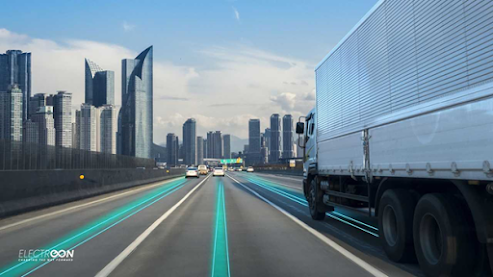
Future Logistics 4: Electric Road System – The Road of the Future


Electric Road System – The Road of the Future


 Hi, I’m Priyanka Sunil- A final year MBA student from Amrita School Of Business majoring in Operations and Marketing. Welcome to my progressive learning space for Logistics and Supply Chain Management.


 PIC : insideevs.com

Until some years ago, there was a belief that electric cars, buses and trucks, both in terms of efficiency and driving range, were inferior to fuel-powered vehicles. Development in autonomous technology and related infrastructure has evolved soo much in ways unimaginable in a span of 20 years. In this autonomous-driving revolution, the road of the future is likely to become the central nervous system.

The worldwide Green House Gas emissions must be decreased by 40 percent-70 percent in order to sustain the global temperature increase below 2 percent and prevent extreme climate change. As road transport is a big GHG contributor, we will need to rely on anything other than fossil fuels for our transport needs in several years. One possible alternative is for our vehicles to run on electricity supplied along the road. According to the report of the Intergovernmental Panel on Climate Change, 72% of the 23% of the global transport sector's total energy-related CO2 emissions are due to road transport, which is expected to rise by 59% by 2030


Electric Road System-Types

The road freight transport can be made more sustainable by the implementation of an electric road system (ERS) which provides electric power to trucks equipped with an electromotor by the use of an external power source. Electric road systems (ERS) provide a way of powering and charging a vehicle as it is driving along a road.

There are three main types of ERS:

·        Overhead lines: Two conductive lines are suspended over the road at a height of approximately 5meters to power heavy commercial vehicles.

·        Conductive track: These are simply conductive metal tracks installed in or on the surface of a road or sometimes along the side of the road.

·        Inductive track: These are buried conductive coils below the surface of the road. An electric current is induced in a coil on the bottom of the car.

Hybrid trucks consisting of an electromotor taking energy from an external source, as well as an on-board power source (fuel or energy-based), are used in these methods to ensure that the trucks have a continuous power source while they are not connected to the external grid. If the hybrid truck is fitted with a battery, the ERS and the regenerative braking system will then charge it.

This does not necessitate electrification of all highways. Rather, on long stretches of highways and in busy areas of urban road networks, charging zones will be included. Since 2016, these systems have been in trial service in Sweden and Germany on public highways.


Sweden is leading our way…..!!!

Road transport accounts for one-third of Sweden's carbon emissions, one-fourth of which is due to heavy freight transport. Sweden has committed to making a transport sector independent of fossil-fuel vehicles by 2030 as part of its climate protection strategy.


Sweden debuted the world’s first electrified road near Stockholm. South Korea and China also have been investing in solar-powered electromagnetic roads that recharge cars and trucks wirelessly to charge of EV batteries and reduce carbon emissions.

The world's first electrified road that uses a flexible arm to charge the batteries of moving vehicles recently debuted in Sweden. Two kilometers of the rail is embedded in a road near Stockholm. The road recharges vehicles' batteries as they move down it. It operates by using a movable arm that transfers the power from the rails to the vehicle battery by linking the vehicles to two electrified rails. The ERS decreases emissions of carbon dioxide by up to 90 percent. Even though The electrification of a kilometre of road costs around $1 million, it is 50 times less costly than the installation of an urban tram line. The strategy is to expand throughout Sweden to help minimise transport using fossil fuels by 70 percent by 2030 

There are a few other eco-sustainable solutions being used across the globe. South Korea developed a 12-kilometer asphalt roadway with electric cables in 2013, to build an electromagnetic field for wireless charging of moving passenger buses, China is testing a "intelligent highway" to produce electricity using solar panels to minimise transportation sector emissions. 

Over 100 years of electric vehicles

It was over 100 years ago, that the first electric cars were produced in US and they controlled the roads until around 1915. There are two methods for powering vehicles with electricity : stored battery power and direct feeds when in motion. Both of these techniques are more than 100 years old.

The challenges of using battery power

Even the best batteries could only store a fraction of the energy compared with the energy content of diesel, for example. This makes driving longer distances more difficult.

Is ERS a better economic solution?

Current infrastructure can be exploited by the electrification of roads to reduce energy use and carbon emissions. Electrified-road transport eliminates fossil emissions by 80 to 90 percent and is a cost-effective, climate-smart way of combining the benefits of rail with truck versatility. Due to substantial reductions in energy usage resulting from the use of powerful electric engines, operating costs would be minimal. Electricity is also a cleaner, quieter and less expensive source of energy, compared with diesel.

Reference

https://eroadarlanda.com/need-electrified-roads/

https://www.vti.se/en/news/electric-roads-a-solution-for-the-future/

https://www.engineering.com/AdvancedManufacturing/ArticleID/20157/Electric-Road-Systems.aspx

https://www.mckinsey.com/industries/capital-projects-and-infrastructure/our-insights/electric-road-systems-the-future-of-freight-transport

https://learningenglish.voanews.com/a/electrified-road-can-charge-vehicles-as-they-drive/4406280.html

https://www.sia-partners.com/en/news-and-publications/from-our-experts/electrified-road-freight-transport

Sunday, September 20, 2020

Addidas And Parley, A Partnership Towards Sustainability


Sustainability in Supply Chain, an yet another buzzword that shouldn’t be missed out by logistics and supply chain aspirants, so what it is and why many firms seek it opens up today’s reading on “sustaining the Sustainability” Sustainable supply chain management is the way of incorporating the supply chain aspects of the firm with the paramount environmental aspects of the earth. It begins right from sourcing the raw materials to delivering the finished goods to the consumers.

But why would a firm want to do that? Is it not a complex process to disrupt the current supply chain?  In return what is the gain the firm is going to see? Well, let’s seek the answers through the sustainable story of Addidas and Parley.


Global production of 448 million pairs of shoes in the year 2019, yes the Addidas group of footwear produces more than 400 million of footwear/ per year since 2018 and these 400+ million pairs of shoes consume tones and tones of polyesters, which serves to be the core raw material in Addidas shoe making business. The crucial part for Addidas here is the procurement of the virgin polyesters which is near to difficult to match up the rising demand, just not in the aspect of quantity but also in the aspect of potential contamination it may cause. Especially when we talk about virgin polyester contamination it is undoubtedly we are talking about the ocean plastic pollution.


Comprehensively, understanding the challenge Addidas took a smart move to procure the core raw material from the place where it is thrown as a waste.  In 2015, Addidas partnered with Parley to begin their Drain and Gain process. It starts with draining the plastic wastes (bottles especially) from the oceans which undergoes the basic cleaning and sorting. Later, these plastic materials reach the gates of Addidas factory where they are get segregated into usable and non usable ones.


Usable ones are converted into recycled polyester thin threads whose characteristics is similar to the virgin ones. And these threads are used for shoe making, Jersey making etc. whereas, the non usable ones go back to the recycling unit.  Replacing all the virgin polyester with the recycled ones by 2024 is the Adidas‘s next mission.

This massive move of Addidas gained several advantages like

  • Environmental and social responsibility
  • Better sustainability in the supply chain
  • Conservation of resources
  • Prevention of more virgin polyesters usage
  • Financial savings as virgin polyester are costlier than the recycled ones
  • Setting up an hallmark of green supply chain in sport wear industry
  • Above all making their consumers to feel the pride

It is just not Addidas and Parley many firms have already begun or planning to begin to incorporate the environmental care within their supply chain. And what we saw is just a raw success story of Addidas and Parley who has set huge hallmark in the sports wear industry.  Currently Addidas is running a parallel implementation, where one side with recycled polyester (It takes comparatively higher time which also include the recycling time) and another side with the virgin ones to keep with the demand.

Hence next time when you’re purchasing Addidas sportswear or when you are checking out your favorite sports personality on field do not forget to checkout their well tweaked sustainable apparels too. #Happy_learning 6

                                                                                                                             - Roobaswathiny A                                                                                                                                


Wednesday, September 9, 2020

Future Logistics 2 : Urban Air Mobility -Get Ready to fly


UAM: The Challenges and Possibilities

Hi, I’m Priyanka Sunil- A final year MBA student from Amrita School Of Business majoring in Operations and Marketing. Welcome to my progressive learning space for Logistics and Supply Chain Management.


As a kid, I was always fascinated by flying cars and always wished I was able to fly one during my lifetime. I remember watching Bruce Willis in the movie The Fifth element flying his cute yellow cab through the sky in the 23rd Century New York City.

For decades the fantasy of flying cars projected through comics, science fiction stories, television shows, and movies have captivated us.

By 2030, the urban population will be 60 percent of the world population. It is expected that this significant population growth will create a real need for innovative mobility options as ground infrastructure becomes increasingly overcrowded. A solution could be to provide people with a safe, sustainable, and convenient solution that leverages the airspace above towns

Urban air mobility (UAM) is an  aviation concept for on-demand and automatic passenger or cargo-carrying air transport systems usually operated without a pilot. This new programs, while reducing congestion, would offer new ways for people to travel across cities and metropolitan centers.


So where is your flying car?

Many start-ups and tech giants have started investing in the innovative technologies needed to make this dream a reality. Enabled by vertical-takeoff and -landing (VTOL) systems, electric propulsion, and advanced flight-control capabilities, these vehicles could eventually reach price points rivaling today’s taxi services. Airbus and Hyundai are among the few companies that have their own UAM divisions.

The companies should plan now to make this a reality as the timelines for designing and constructing these are really long. If they hold back until air-mobility solutions are ready to hit the skies, their drones will be the aerial equivalent of a bridge to nowhere: expensive technologic marvels that serve no purpose.

Physical Infrastructure to address the market

Flying vehicles need places to take off, land, receive maintenance, charge batteries, and refuel their tanks and park to offer sustainable service. This is further complicated by the fact that the demand to fly is different during different times of the day.

The physical infrastructure will be a major determinant of the size of the addressable market, as the only possible trips are between VTOL ports. Flying-vehicle transport could follow a pattern similar to that seen in today's helicopter market, where there is a limited number of potential destinations. The location of the infrastructure will determine the level of market conversion. If a landing spot is too far from its origin or destination, the customer may not save enough time to make sense of a trip to the UAM.

Illustrating the Infrastructure Network design

·       Vertihubs-Conceptualized as stand-alone buildings built-in central, high-traffic areas

·       Vertibases- To be located in medium-traffic areas like  suburbs, or at major work or retail locations

·       Vertipads- Typically located in suburban or rural locations

Pic: MCKinsey & Company

On the government side, there appears to be growing interest in infrastructure as well, with some public agencies investing in developing air-mobility infrastructure for drone use cases. They are also figuring out possibilities to integrate these systems with the existing air traffic management system.

Safety, convenience and sustainability

·       Many are electric vertical take-off and landing (eVTOL) aircraft designed for quiet, emission-free operation and energy conservation

·       Most manufacturers transfer the mechanical complexity as much as possible to the software to improve safety

·       The infrastructure will need to include takeoff and land points that are close to where people live and work

·       Riders will use an app to book their air taxi and will be able to browse flights based on route or time and integrate your personal electronic presence and devices with the buildings and infrastructure you have to move through.


Air-mobility solutions could transform commutes, package delivery and other mundane tasks into ways that seemed impossible just a few years ago. By making distant suburbs a viable option for urban workers, eVTOLs could help reduce pollution and alleviate the housing congestion in urban areas. Rapid delivery of the drone could speed up the already steep e-commerce spike and boost the bottom line at many companies. And air mobility's overall economic benefits could be immense, as new applications increase efficiency and productivity. First, however, companies, governments, and other stakeholders need to take careful steps to create an environment that allows for these societal benefits. Just as with any new industry, much is uncertain, but the potential for gains is also great.

Get Ready To FLY .....!!!!!

Reference

https://www.airbus.com/innovation/zero-emission/urban-air-mobility.html

https://www.honeywell.com/en-us/newsroom/news/2019/01/what-is-urban-air-mobility

https://www.mckinsey.com/industries/automotive-and-assembly/our-insights/to-take-off-flying-vehicles-first-need-places-to-land?cid=other-eml-alt-mip-mck&hlkid=bd756ecece11481ca3b5702705582e0c&hctky=12024655&hdpid=6b6acce2-37ab-4754-a105-af775901c0d2 


Supply Chain Dominance of China

Supply Chain Dominance of China A “Made in China” label has always been problematic in the U.S. In the early years of globalization, compani...