Showing posts with label ethical supply chain. Show all posts

Sunday, October 4, 2020

Black Diamond Supply chain


Coal

Coal has smaller energy densities than oil and natural gas, thus lowering its value as an internationally traded asset compared to oil. Australia is a large international exporter, however. In wide piles near to shipping ports or other end-use locations, coal is easy to carry. If newly industrialized regions search for more fuel for energy, demand for globally imported coal will continue to increase. Coal is an essential energy source. Electricity and heat are created after the burning of coal. Coal has its meaning in the commercial sphere. Of the world's power, about 40 percent comes from coal.

For thermal power generators, coal is the single biggest cost factor, usually accounting for 60 to 70 percent of input costs. And coal management is difficult, with players facing a variety of challenges in the supply chain, from manufacturing to storage management, bulk processing, yard management, and overall quality management. The addressable value loss will hit 7 to 12 percent of the overall cost of coal across the entire chain in emerging markets like India.

Where does value getting lost?

In the sector of coal procurement, to begin with. Many power utilities are dependent on alternate paths, such as spot and short-term coal contracts or imports, which are unable to satisfy the specifications of long-term contractual contracts with domestic suppliers. This leads to logistical difficulties in the context of capacity limitations (including rail and port) and substantial reductions in quantity due to inadequate external infrastructure. Furthermore, it is a tremendous challenge to handle quality declines across the supply chain, compounded by insufficient calculation of output and inadequate yard and stockpile management activities.

Understanding and evaluating the overall delivered cost of coal, including FOB port costs, storage, and other indirect costs such as consistency losses, is needed to assess the best of a variety of possible sourcing choices. A short supply of domestic coal causes several power plants to examine imports, which includes a detailed analysis of global coal markets and the discovery of strategic sourcing opportunities. For example, for countries such as India and China, small and mid-size mines in Indonesia, with low cash costs and higher sulphur content, are good bets from a cost perspective. In addition, as demand-supply and regulatory situations continue to shift, power players could develop flexibility and take advantage of developing opportunities to import and use coal of varying grades and quality.

The prospective ban on imports of low-grade coal into China, for example, would free up prospects for other Asian countries to supply low-calorific-value, inexpensive coal. Similarly, while Indonesia will continue in the next 10 to 15 years to be the primary source of imported coal for India's power players, other markets are developing as long-term strategic alternatives, including South Africa, Australia, and the United States. It is also a smart decision to set priorities for continual updating and continuous promotion, development, and encouragement for the purchase of goods and services with good practice codes.

In deciding on the best coal mix to feed into the boilers, most Indian power plants that use multi-source coal face a challenge. It can be a challenging process to arrive at the most cost-effective and operationally efficient blend that needs the correct collection of instruments and the appropriate execution of blend trials. All possible cost elements (direct and indirect), including the effect of a blend adjustment on performance, are analyzed by a good analytical model. Kearney developed a model that explores considerations such as the cost of coal per tonne by grade, the performance of the boiler at each input (gross calorific value and overall humidity), and other indirect costs, including the removal of ash and improvements in auxiliary usage. Trials can supplement the study by supplying the model with realistic inputs, stress-testing main nodes and conclusions, and understanding the necessary organizational improvements. Figure 3 illustrates our preferred three-step strategy for arriving at the optimum blend: preparation, implementation, review.

Usually, the emphasis in India's coal yards is on timely distribution to the downstream node (for instance, distribution to bunkers) and timely discharge of coal at the yard. Other critical aspects, such as proper yard arrangement that makes first-in, first-out (FIFO) operations and optimum use of the equipment and usable yard area, are also taken into account by these practices. In addition, attempts to regulate spontaneous combustion, the key cause for failure of GCV, are largely retroactive, not well-planned, and marred by myths about procedures of combustion regulate.

The first step in adopting FIFO strategies and resolving GCV losses is to identify the correct configuration of the yard. This includes considering the quantity of each grade of coal used, the retention duration of a product, and the optimal usage of facilities. Help for this comes from a tracking method for coal pile age that tracks the stack-wise age of coal and encourages FIFO events, providing advice on which stack to use for distribution and when to stack new coal.

Reference

https://www.es.kearney.com/energy/article/?/a/fuel-management-securing-value-across-india-s-coal-supply-chain

http://www.bcmcoal.com/blog/coal-supply-chain-management/#:~:text=Coal%20is%20an%20important%20source,electricity%20and%20heat%20is%20produced.&text=In%20our%20India%20which%20is,across%20the%20entire%20supply%20chain.

https://www.google.com/search?q=logistic+of+fossile+fuel&oq=logistic+of+fossile+fuel&aqs=chrome..69i57j33l7.5649j0j7&sourceid=chrome&ie=UTF-8


Due diligence in Gold supply chain management

Welcome back Readers I’m Sivakami - A final year MBA student from Amrita School Of Business majoring in Marketing and operations. I have found my space to explore on the various verticals in the area of  Logistics and supply chain and of course not limited to theories and  empirical studies ๐Ÿ˜…. So come lets discover on our never ending territory ๐Ÿ˜‡ 

Exploring more on supply chain management, it was eye opening for me to know how important due diligence is. In fact, in today’s globally connected world, companies no longer simply compete company-to-company, rather they compete supply chain-to-supply chain. Modern companies are discovering that third-party relationships are a cornerstone of most of their day-to-day operations, providing them with a critical edge over their competitors. The supply chain risk is mitigated when companies take effort to investigate potential business partners or the entities in the supply chain. 

Recently I read an article which said ‘Natural resources organisation Impact and the European Union (EU) have successfully implemented a traceability and due diligence system from mine site to the international market for artisanal gold from Cรดte d’Ivoire as part of the Just Gold project’. This provides the evidence of traceability supporting the artisanal gold miners as well as enables international buyers to track their gold to the pit it was mined at. The other motive to implement the project was to support private sector actors to complete due diligence on their supply chain to identify, mitigate and publicly report on risks such as human rights abuses, forced and child labour and corruption.

The first responsible export of artisanal gold comprised a 755 ingot of gold mined in Dabakala and was traced to Abidjan, where the exporter is located, with full due diligence completed on the supply chain. The Just Gold project has continued to operate throughout the Covid-19 pandemic, during which time artisanal mining communities have been severely affected, as prices paid for gold have dropped, while the cost of living has drastically increased.

Due diligence system guaranteed that the cooperative and its members are paid a fixed price, which is calculated based on a method which minimises the impact of local price fluctuations in times of pandemic. Adding to it this offered Cรดte d'Ivoire unexplored opportunities for economic activity and development. The consumer market nowadays pays more attention to the conditions in which the products are manufactured and when they purchase gold, they want to be sure it isn’t tied to illicit trade or human rights violations.
On the whole, Ivorian government recognises the importance of due diligence in contributing to sustainable development and increasing artisanal gold production, and is taking important steps in this direction. This is even more important under new European regulations coming into force in 2021 where European importers of minerals such as gold will be required to complete due diligence on their supply chain.

Happy Reading from Sivakami :)

Sunday, August 23, 2020

Shattering Glass Ceilings : Rise of women in supply chain logistics


Shattering glass ceilings :  rise of women in supply chain logistics

I am Gayathri Nair ,a student of management in Amrita School of Business . Raised to believe that nothing is impossible because I am a girl ,the success stories of women in traditionally male bastions fired my interest in them and their trials ,tribulations and finally success.


Gone are the days when the girls waited with bated breath and quickening heartbeat for their prince charming to come in search of them with the proverbial glass sandals . The women today are more focused on shattering those glass ceilings that box them in .

Little girls are no longer made of sugar and spice ,they are strong and resilient ready to take on the ever growing space of supply chain logistics .

Gender bias is a force to reckon with .

Supply chain is often seen as numbers. A recent poll by the SCM world found out that only 10 percent of the leadership within supply chain are held by women .This could be partially due to the gender bias which sees women as the weaker sex and also partially because the root of supply chain is manufacturing and transportation which are both perceived to be not women friendly . It has to change and the old order is changing yielding place to new as it is agreed that women have a different range of skill sets that will benefit the supply chain industry .

There are quite a few women who have made inroads into the top levels of supply chain . They are where they are because of a strong work ethic , a passion for supply chain and logistics , ability to be comfortable as one of a few or probably the only woman in the room.

More companies are making an effort to attract women to supply chain management and leadership positions aiming at diversity and inclusion. Most companies are slowly but surely making a targeted effort to bring in more women to supply chain work force by recruiting , developing and advancing women in supply chain. Companies are by policy trying to offset the gender bias that exists consciously or more often unconsciously by creating better women focused talent retention programs ,like giving a new mother the flexibility to work from the comforts of home .


How the leaders cleared the hurdles : lessons in tenacity

Most of the women who trod the unbeaten path and yet reached the pinnacle swear by a few qualities

  • Integrity...promise something then see it's delivered .
  • Keeping your eyes open ....be a sponge absorb everything
  • Confidence ... Have faith in yourself when the rest of the world is doubtful
  • Patience ... Everything happens for a reason ...be that person to find the reason
  • Reflective ..... Handle constructive criticism , reflect on it and move forward
  • Invest in yourself .... Interact , learn and challenge your limits
  • Change is inevitable , learn to change with change
  • Communication ....let there be a channel of open communication in the work space


They lead by example : few  women who changed the face of supply chain logistics

Joselina Peralta            

she is the vice president of global supply chain and procurement operations at Troy Corporation says it's her family who taught her to think out of the box .her mentors believed in her abilities to lead . She believes in active listening to be the key that opened the doors of corporate ladder for her . Putting people first ,being authentic and versatile and having the courage to take risks  and  gratitude is what has put her where she is ..on top .


Martha lumatete


she is working for Southwest airlines in software acquisition . Her mantra to success is to be an expert ,to be trustworthy and clear .to have an open mind and be  receptive ,to be persistent and live in the moment .


Ann Drake 


 She is the founder of Awesome ..Achieving women's excellence in supply chain operations ,management and education . It is a leadership initiative that moulds women to stake their rightful claim in the logistic industry by providing opportunities for learning ,mentor ship and professional growth . She is continuously opening up vistas in this hitherto male bastion . She is the  only woman recipient of the Distinguished service award from council of supply chain management professionals


Megan Smith 


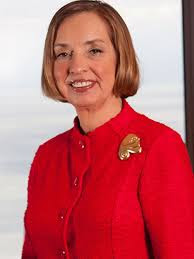
She is the CEO of Amware logistics and heads a company choc a block with women leaders who hold critical positions not because she wants to overcome gender bias but because she firmly believes women are more gutsy , passionate and willing to take risks .Amware has now been branded as Symbia Logistics which is an example of what can happen when gender diversity initiatives are built into a company ? they Succeed .


Edwina Justus 


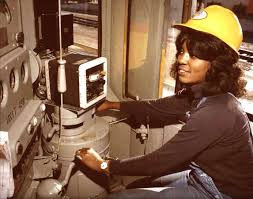
The first coloured lady to become female locomotive engineer of Union Pacific Railroad . She overcame gender ,colour and racial discrimination to carve her niche.


Christina Christensen 


she is a senior manager in industry and solutions marketing in kinaxis, a supply chain technology organization supporting businesses in increasing ROI and revenue while mitigating risk .she broke the stereotype that women after babies need to take back seat . She made sure she balanced the home work front ,not letting her gender be a stumbling block .success to her her is knowing that she deserved the seat at the table and owning it .confidence,being  proactive ,agility to react to global visibility are qualities instrumental in putting her where she is ...safely ensconced in the drivers seat


Melonese Wise


She is a leader that is helping to forge the future of supply chain solutions as a robotics innovator .she is the CEO of Fetch Robotics ,which produces autonomous mobile robots to find, track and move inventory .  


These women and many many more are revolutionizing a male dominated field .they have left their foot prints firmly etched in the supply chain track . Initiatives like the women leaders in supply chain luncheon brings together leaders from around the world to celebrate women's role in the field of logistics .These women and many more have dared to dream and touched the sky and grabbed a fistful of star dust .  


More power to them..!!

Thursday, August 20, 2020

The Global Supply Chain of a Mobile Phone


 Dear Readers❤, This is Saradha Preethi and I'm back with another Interesting blog on  "Global Supply Chain of a Mobile Phone"! If you haven't checked my previous Blogs, Do check it!๐Ÿ˜Š https://on-time-in-full-consumer-goods


        In this article, we will look at some of the issues identified in the supply chain of technology companies and use the example of the mobile phone supply chain.

This article includes,
  • What is included in the Supply Chain of a Mobile Phone?
  • What is supply chain management
  • Ethical issues in supply chain management
  • Electronic companies with ethical supply chains
  • The benefits of an ethical supply chain
What is included in the mobile phone supply chain?

The mobile phone has an extremely complex supply chain, which basically consists of three areas:
  • Extraction of raw material,
  • Manufacture of components,
  • Assembly.
✔ Extraction of Raw materials:


        The bottom of the supply chain is the extraction of raw materials, such as metals and metal ores. The raw materials are used to make basic phone components. Often raw materials come from mines with poor environmental records, the profits of which are sometimes linked to armed conflicts, and have little or no protection for workers ' rights.

        China is one of the largest suppliers of raw materials for electronic products in the world. However, lax environmental and social regulations have meant that its mining industry is heavily associated with environmental degradation and poor working conditions.

✔ Manufacturing of Components:


        The next few steps in the supply chain require manufacturers to convert the raw material into a usable material or component. The end product consists of many different components, each with its own supply chain.

The basic smartphone consists of the following components:
  • A circuit board containing the brain of the phone;
  • An antenna,
  • A Liquid crystal (LCD) display;
  • A microphone;
  • A speaker;
  • A battery and
  • A camera.
        Component suppliers are numerous and will often specialize in particular parts which may be used by many different brands. For example, the iPhone contains components from more than 200 suppliers. This is usually part of the supply chain of companies with the least control or knowledge due to the number of manufacturers involved.

✔ Assembly:

        Once the components have been supplied from the manufacturers, they are taken to the assembly plant. In China, Foxconn is the largest company to assemble components for electronic companies. The iPhone is famous for its Zhengzhou facilities in China. According to the New York Times, 94 production lines and about 400 steps are needed to assemble the iPhone.

Supply Chain Management:


        Over the last ten years, companies have recognized that many infringements of workers ' rights have taken place further down their supply chains and have therefore extended monitoring and auditing processes to include some of these suppliers. It should be noted that not all companies do this.

        Ethical Consumer expects all companies producing a physical good to have a policy of managing the supply chain. We then rate each company on the basis of a set of criteria. These criteria assess its policies as well as how it implements its audit strategy, what stakeholders it works with to verify labor standards, and how it addresses difficult issues such as illegal freedom of association.

The Ethical Consumer Supply Chain Management Policy Rating is broken down into four parts:
  • Supply chain policy
  • Stakeholder engagement
  • Auditing & Reporting
  • Different issues                                                       
Ethical Issues in Supply chain management:
  1. Many companies have different definitions of the rights of workers.
  2. Audit fraud & fatigue
  3. Failure to meet the standards set out in the code of conduct of a company.
  4. Country law & regulations
Electronic companies with Ethical supply chain:


        Currently, only Fairphone receives Ethical Consumer's best rating for its supply chain management in our mobile phone guide. All other electronic brands in our guides receive the middle or worst rating of their supply chain management.

The Benefits of an Ethical supply chain:
  • A company with an ethical supply chain will choose suppliers who respect the environment and their employees and reward suppliers who pursue good practice and encourage others to do so.
  • On the other hand, if a breach is found in a supplier company, it often wields a huge amount of economic power. By making it clear that they will not buy from those who abuse workers' or environmental rights, they can force reform within the sector and prevent the violation from happening again. Suppliers can no longer afford to allow disasters such as serious pollution, deforestation, or factory fire if they risk losing customers. They will, therefore, ensure greater due diligence and care.
                                                 Happy Learning with Sara!!๐Ÿ˜Ž


Sunday, August 16, 2020

Sustainable Supply Chain: Some Best Practices Across the Globe


 Sustainable Supply Chain:  Some Best Practices Across the Globe

Hi, I’m Priyanka Sunil- A final year MBA student from Amrita School Of Business majoring in Operations and Marketing. Welcome to my progressive learning space for Logistics and Supply Chain Management.

Sustainable supply: The value of collaboration and education | Pharma  Logistics
Pic:pharmalogisticsiq.com

        In the past months, we have unexpectedly witnessed clean air as a result of industrial shut down due to steep Covid-19. The larger truth remains unchanged that the world is yet to achieve the reduced greenhouse gas (GHG) reduction target set by the Paris Climate Agreement. For business leaders heavily taxed by the pandemic, sustainability and profitability may seem like conflicting goals. Companies are all in for cutting costs and investment in renewable energy and advanced manufacturing technologies may appear difficult to justify.

        As firms have little control over supplier’s activities, procurement and supply chain are considered as weak links in organizational sustainability. But, logistics is one area that is in the firm’s control. A typical company’s supply chain accounts for greater than 80% of GHG emissions and impacts on land, air, water, and biodiversity.

    Many large businesses across the globe are learning how to maximize the synergy between sustainability and operations. Some best practices in the functional area of Procurement, Supply chain and Logistics illustrate the potential


Sourcing

·       Participating in global initiatives for sustainable sourcing

    Schneider is a member of the Conflict-Free Smelter Initiative. They ensure sourcing of smelter or refiner minerals from conflict-free sources. Another example is Pearson, who is a member of the Book Chain Project.  This helps provide sourcing information from the origin of fiber to the working conditions in factories where the publishing materials are produced

·     Banning the material sourcing from territories involved in conflicts and unethical practices

     H&M has banned the use of cotton from Turkmenistan and Syria due to the poor labor conditions and ongoing political conflicts in the countries, respectively. This has helped H&M in maintaining its commitment to responsible sourcing of materials.


Pic:goodhousekeeping.com


Suppliers’ Sustainability

·       Integrating sustainability in tendering process

      BMW has integrated minimum sustainability criteria into the tending process. In order to qualify for BMW’s tenders, suppliers with +100 employees should be at least certified on ISO 14001, whereas suppliers with +500 employees should at least publish an annual sustainability report. This increases the competition among the suppliers to do well in terms of sustainability.

·    Assigning sustainability goals and evaluating the performance of suppliers

   Adidas uses the e-KPI2 program for assigning sustainability goals and evaluating the supplier’s performance.  This helps in identifying and addressing the individual needs of the suppliers. Also,     BMW annually assigns scientific sustainability goals to its suppliers in compliance with the CDP project. In 2016, 69% of the BMW’s suppliers reported a reduction of 36 million tons in CO2 emissions.


Domestic Purchases
·       Promoting domestic purchases to boost local business and employment

    Vivendi and Kesko report the extent of local purchases as part of their sustainability performance since local purchases help in boosting the domestic market and creating job opportunities.


Logistics

·       Increasing the share of sea-freights over air-freights

      In 2015, Schneider implemented preferred sea freights in certain areas and saw that CO2 emissions decreased by 23.8%.

·       Reducing emissions from vehicles

    The gas division of Enbridge converted 648 of 853 fleet vehicles to run on natural gas. Enbridge saved 500 t CO2(e) from converting the vehicles.

·       Reducing emissions from employee transport

  Enbridge has 40 TelePresence videoconferencing meeting rooms as an alternative to business travel. This helped the firm in saving 14 t CO2(e).

·       Using reverse logistics to optimize routing

    Daimler optimized the transportation of its reusable shipping containers by using the reverse logistics techniques to move the containers in the same shipment which moved the goods initially. In 2016, using reverse logistics eliminated 2200 t CO2 emissions and also reduced the freight costs.

·       Managing shipping volume to decrease the load on logistics

    In 2012,  BMW started using a screw compactor to compress the recyclable packaging materials before shipping to the recycling facility, which increases the shipping volume of the packaging materials.  The increase in the shipping volume saved BMW roughly 24,000 truck kilometers (emission + cost).

P90394461_highRes_the-bmw-group-is-set

 Pic:greencarcongress.com

Sustainability doesn’t always have to come with an enormous price tag. Environmental performance can be a byproduct of optimization of operations-be it to improve quality, reduce cost, or boost productivity. Efficient supply chain and operations not just reduces cost but also use less energy, fewer resources and generate less waste. Companies can position them for growth by working closely with suppliers to improve sustainable operations in the supply chain.

 Reference

https://www.se.com/ww/en/about-us/suppliers/conflict-minerals.jsp

https://www.greencarcongress.com/2020/07/20200728-bmw.html

https://www.researchgate.net/publication/284722494_Responsible_sourcing_of_metals_certification_approaches_for_conflict_minerals_and_conflict-free_metals

https://goodonyou.eco/how-ethical-is-hm/#:~:text=H%26M%20has%20pledged%20to%20become,or%20sustainable%20materials%20by%202030.

https://www.mdpi.com/2071-1050/11/16/4307


Supply Chain Dominance of China

Supply Chain Dominance of China A “Made in China” label has always been problematic in the U.S. In the early years of globalization, compani...