Showing posts with label Location strategy. Show all posts

Thursday, October 15, 2020

Firecrackers of Sivakasi - A peacock story

Till the year 2010, a peacock box had always accompanied my dad’s Diwali bonus while my dad had always concerned about how to split the bonus money for various purchases, my brother and I had always concerned about how to split that peacock box which had separate cracker boxes inside. Being an elder one, my brother forever did the inauguration, where boxes of flower pots, chakras, poppers, sparklers, bombs will be laid down open followed by a crucial splitting.  When it comes to splitting it has never been a happy story for me as there is a strategic game rule framed by my brother that never favored me in history and the rule goes like this; Within 30 seconds one has to grab as much as they can with both their hands when the timer ends whatever one posses will be their share to burst. Eventually, my brother always won a bigger share since he always had bigger hands than me.


Today thinking about Diwali arriving next month unleashed abundance of real stories within me and it has also made me to think about “what might be the story that our favorite peacock box could tell us if it can speak”. Won’t it tell us its story being born in Sivakasi, jam-packed by thousands of workers and travelled all the way to our home to brighten our festival? So let us decipher the supply chain of Sivakasi crackers to understand the value that each peacock box carried and carries.

The Location Advantage 

Sivakasi, a land often hit by drought, often left with no water for agriculture potentially turned out to be an ideal location for manufacturing any fire related goods. Though it might seem to be a man made choice, the land of Sivakasi is naturally gifted with the abundance of sunlight letting it to happily cherish the cracker making and match stick making unlike any places in India. Especially, the cracker industry is so massive that it satisfies 90% of the India’s crackers demand.

The human force Advantage 

After location, availability of large workforce is the next factor that gives a supplementary boost to this industry. Major works in the fire cracker production requires physical tasks which suits the people in and below the poverty line of Sivakasi to ace manufacturing without the need of any formal education.


Clubbing the two primary resources the production process begins with the procurement of raw materials which varies with each type of cracker. Like iron rod for sparklers, strings for various bomb, paper rolls for poppers etc. yet the common chemical raw material that is used is the barium nitrate which is necessary for all sparkling night burnt ones. Following the procurement the manufacturing happens in the several cottage industries which is set far from the main town area to prevent substantial damages if any accidents might occur. Drying in the next stage after manufacturing and followed by which the packing happens. Finally, the primary selling happens between the manufacturer to distributor and the secondary selling happens between manufacturer to the retailer and lastly from retailer to customer.

Current Challenges 

Fire cracker industry in Sivakasi is an $800 million commerce that has been providing livelihoods to millions but in 2018 India’s cracker ban was an ultimate shock to the town which was relying on it for the next day meal. Though the ban focused on curb of air pollution the industry didn’t see it coming so soon. To bring in a win – win situation PESO (Petroleum and Explosives Safety Organization) suggested Indian government on regulating the terms on production of fire cracker which avoided harmful chemicals like barium nitrate. PESO also enforced to initiate the production of green crackers rather than the conventional one. 

Green crackers require altogether a different chemical binding which causes less air pollution and the chemical mixture is yet to be proven at the labs. For Sivakasi, a town which found life out of barren land won’t see green crackers as an end but a new challenge to rise even higher than yesterday.  On the other hand, Sivakasi crackers union believe that Tuticorin port with an improvement on infrastructure will be a potential place to kick start the export of their crackers to speak the story of finest handmade crackers across the globe. #Happy_learning9

                                                                                       -Roobaswathiny A (Amrita School of Business)


Wednesday, October 14, 2020

Logistic Optimizer : Developed by TCS and its Features

 Welcome back Dear Readers, This is Dharunanand R pursuing MBA in Analytics and Operations from Amrita School of Business. In this week's blog on Supply Chain lets explore  "Logistic Optimizer : Developed by TCS and its Features"


Recent business disruptions have put spotlight on the importance of agility in the increasingly complex modern day supply chain network which involves multiple parties challenges at various nodes such as unsynchronized packaging and material flow due to isolated information on supplier capacity production capability and inventory tracking escalating fuel prices an optimized route selection and poor capacity management leading to higher inbound and outbound logistic cost suboptimal distribution planning and delivery reliability caused by lack of real-time tracking.


Limited order visibility due to unstructured communication between partner carrier and customer makes it difficult to achieve the singular goal of providing excellent services to fast changing customer demands in order to quickly respond to this evolving and dynamic environment connected real-time and automated logistics is the need of the hour.

Logistic optimizer which is developed by TCS provides an end-to-end integrated logistics solution powered by IOT and also it provides unique AI & ML based dynamics for casting and planning integrated capacity management dynamic scheduling, Real-time event response and order visibility

This enables the chief Logistics officer to take key decisions at the right time by providing integrated view of KPI’s customized to his business needs it gives the logistic manager a holistic view of material flow throughout the network and helps adapt quickly to dynamic changes in supply and demand.

By identifying gaps in available resources, it provides contextual insights into all nodes enabling cost optimization thus making the chief financial officer delighted


The AI based module constantly learns real-world constraints to simulate scenarios based on not only the company's key business objectives but to the customer's priority.This logistic optimizer connects with any existing enterprise solution and also the solution is quickly scalable and customizable with unmatchable results it promises to make the logistics dynamic resilient and sustainable.


Tuesday, October 13, 2020

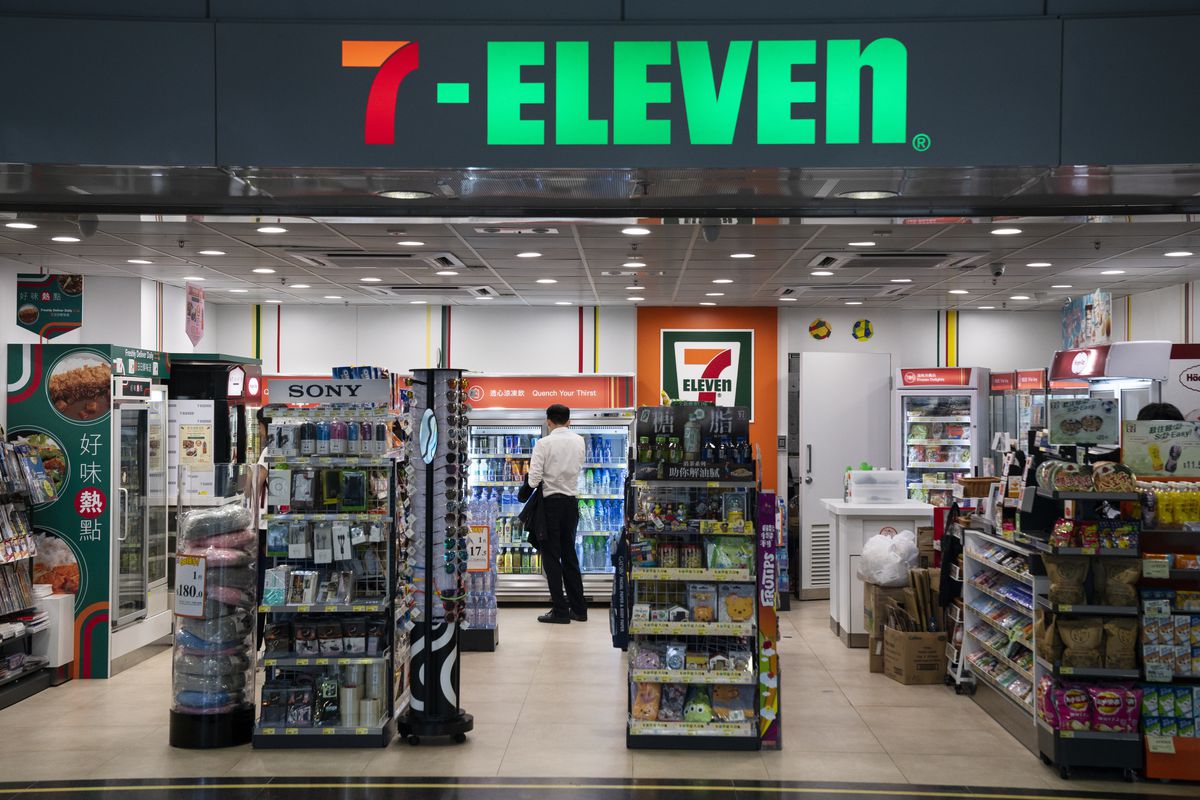
The Success Story of 7-ELEVEN

 Hello everyone.I am Madhumitha.M doing my second year MBA in Amrita School of Business.Welcome to my blog on topic "The success story of 7-ELEVEN".From this blog we know not only about information on industry but we also know about the supply chain management of the company.Hope you find interesting.

1.Network of the store

The success of the Seven-Eleven supermarket network is largely attributed to the nature and operation of its supply chain, and its commercial aim is to provide consumers with the goods they want when they need them. From a strategic point of view, the company's key goals are to seek a micro-balance between supply and demand across the geographical, seasonal and regular schedule. The location of the shop plays an irreplaceable role. The dominant tactic of SE is to open multiple outlets in a concentrated manner, thereby practically conquering the market it reaches. The organisation employs distinctive aspects of this approach in four major ways: economic distribution, brand recognition, competition entry avoidance, and increased quality in directing franchised stores.

2.Inventory Policy

There is a tradeoff between shipping and stock, and cutting prices on one raises spending on the other. Seven Eleven was able to brilliantly use the transport section to keep inventory close to empty. Stores are replenished at least three times a day and the need for safety stock was removed by this limited lead period. Seven-Eleven stores were allowed by the information system to help balance supply with demand.

For instance, traditional breakfast items are stored earlier during the day, and later in the evening, typical dinner items are stored. A store was able to convert shelf space to introduce new items by identifying slow or non-moving items, thus utilising full space utilisation. When a new product is launched, within the first three weeks, the decision to begin storing it is made.

3.Point of sales

The point of sales system makes it possible to track each merchandise sold in real time. To remove dead stock, each store strictly adheres to the scheme. For product growth, knowledge obtained by the POS framework is invaluable. Since the POS gathers data about clients. The cashiers can first scan the bar code and give the customers a quote as soon as a customer orders an item, the customers go to the cashier checkout. The cashier will input the amount paid by the clients after payment. They then click buttons above the POS, which is blue for men and pink for women, depending on their estimation of age and sex. After checkout, the data is transmitted to the mainframe computer headquarters via the network . In addition, the speed of the headquarters monitoring the customer demand is vastly increased through this hardware, goods and time data. It helps predict the operations of sales and distribution.Headquarters review and upgrade information every day and send it back to the stores each morning via the network. In the goal of optimising order location, all this information is available at the graphic order terminal.

4.Distribution management

Distribution is the supply chain 's final connexion between suppliers and customers. The quality of delivery speed determines the degree of customer loyalty. All stores are given cut-off times for buying breakfast, lunch , and dinner. It is transmitted directly to the retailer as well as to the delivery centre anytime a store places an order. As soon as the supplier collects orders from all Seven-Eleven shops, the supplier begins production to fill the orders, which ensures that all suppliers base their estimate on the real consumer data as a result of the absence of the 'bullwhip' effect, we can see that all supply chain players are focused on raising the surplus of the supply chain, not just their own benefit. Orders are delivered to fulfilment centres (DCs) by truck. This way, the items arrive at the shops only as they are expected.


The implementation of combined delivery distribution has resulted in dramatically decreasing the number of delivery trucks used from 70 trucks a day to about 9 a store. Before that, it was the retailer that supplied the store with merchandise, which was very unproductive. Now, all manufacturers have to do with this new approach is to supply the goods by truck-loading trucks taking advantage of economies of scale, and from there they are shipped using less-than-truck-load to every store.

5.Strategic fit

By serving as the supply chain 's boss, Seven-Eleven was able to resolve all the challenges and create a strategic match between its competitive approach and its supply chain strategy. It manages to delegate tasks to multiple levels of the supply chain in order to ensure proper responsiveness. Its success can be attributed to the outstanding match between its practical strategies.

Thank you all!☺️


How Technology is Changing the Future of Logistics


Hello everyone,

This is Vembu Raj T, pursuing my MBA second year in Amrita School of Business, Coimbatore. Todays my blog is on topic “How Technology is Changing the Future of Logistics”. From this blog we would know about the five big technological developments that are transforming the logistics industry 's future.

Technological evolution is pushing the boundaries and changing the way the world does business. Today, for instant access, we're used to everything being online and right at our fingertips. Is it possible to receive a package less than an hour after ordering? Now it is possible depending on where you live, via Amazon, the pioneer of fast-paced delivery services. Improved technology has also improved supply chain efficiency, minimizing costs and mistakes. These advances benefit all areas of the logistics industry: trucking transportation, international transportation (ocean and air), supply chain management, and shipment tracking.


Here are five big technological developments that are transforming the logistics industry 's future.

1.      Radio Frequency Identification (RFID):

A common labor-saving way for businesses to monitor their inventory is RFID technology, which has also been in use for a few years.  A tag or sensor is placed on the product and radio waves are sent out. The information is then received and processed by the organisation. Barcodes are similar to RFID tags, but the superior speed of information delivery and data processing of RFIDs is more attractive to companies and the way technology travels. Today, many companies are using RFID tags in their distribution warehouses to monitor containers. Other industries are already using RFID tags, such as the apparel industry and major theme parks.

2.      Automotive trucks and drones:

With trucks not too far behind, autonomous cars are already a reality. Embark and Uber have both used autonomous vehicles for long hauls, with Tesla launching a truck this year. Although it wasn't fully driverless, it is a major move in this revolutionary technology with a driver in the passenger seat to control the machine and has the ability to improve productivity in the distribution phase.

Amazon have revealed the future of drones, called Amazon Prime Air, bringing deliveries right to the door. Because of regulatory measures and related costs, drone deliveries are still a few years away, but the prospect of not having to sit around over a four-hour period waiting for a delivery is very tempting.

3.      Shipment Tracking Systems:

Customers previously booked orders, obtained an approximate arrival date, and then, unless they wanted to make a phone call, were left in the dark. Today, advancements in the Internet and software give consumers 24/7 access to shipping and tracking systems. Not only does this boost the customer experience, but it also saves the business time and money.

4.      Enhanced GPS Accuracy:

Completely gone are the days when before you left the house, you printed out instructions from the screen. Nearly everybody uses GPS today, whether it's built-in on their cars or mobile phones. Throughout the years, the precision of these instruments has improved dramatically, not only helping angry, lost drivers, but also enhancing the supply chain. The advanced GPS accuracy makes it possible to increase efficiency and satisfy customers by monitoring the positions of trucks and improving transportation through access to updated traffic data.

5.      Social Media:

The power of social media is optimizing the logistics industry and operations as a whole. These networks are becoming the fastest and most powerful way for businesses to connect with consumers, rapidly sharing urgent information, industry news, and customer responses. 59 percent of Americans who have a social media account believe, according to Hootsuite, that customer service via social media has made it easier to address questions and concerns.

Tuesday, October 6, 2020

Supply Chain Of India's Mid Day Meals Scheme


“Centralization and Decentralization” are two sides of a supply chain coin, which influences the decision making of a SC manager. Centralization is a location strategy where supply chain majorly performs being located at one central location; on the other hand decentralization is where the supply chain operations are dispersed across various locations. These uniquely attributed models have their own style of creating credibility in the value chain; that eventually brings in more challenge for the SC manager while choosing one over the other. And today, India’s Mid Day Meal Scheme (MDMS) will be our learning companion that will help us to understand the centralization and decentralization model better.

India, a fruitful young country with 39% of its population being below 18 till date fights against one giant monster called poverty.  As a country India cannot afford to lose these young inquisitive minds or the nation’s future promise to the threat of starvation and undernourishment. The “Mid Day Meal Scheme” introduced around the year 1960’s at Tamil Nadu brought in a new ray of hope in the improvement of school children’s nourishment as well as  in the increased enrollment  of children in the school. Following Tamil Nadu, Kerala and Gujarat were the other two states who also officially initiated the scheme around 1980’s. Currently across India more than 12 states have successfully implemented the MDMS.


The main operational objective of the Mid Day Meal Scheme is to prepare and deliver the tasty nutritious food to all the Government school children till upper primary class. The model which was followed first and foremost was the “decentralized kitchen” where every school had a kitchen setup either within or at a closer proximity and a monitoring person takes care of raising the orders, purchasing the orders and distributing the orders to the culinary staffs. The kitchen should make sure that meal is ready before the clock strikes 12pm for the children to come have their lunch. Having said about the simplicity, the decentralized model suffered from major disadvantages like;

  • Lack of standardized food quality
  • Complexity in monitoring the MDMS as the numbers of silos were high
  • More operating costs
  • Lack of appropriate infrastructure at schools to set up the kitchen (2004 Kumbakonam kitchen fire accident is one unforgettable tragedy which took away lives of 94 children due to poor infrastructure which wasn't suitable for possessing a kitchen the school had)

State government saw “centralized kitchen” as a potential solution for the challenges of decentralized model. And this centralized kitchen is usually a public-private partnership where NGOs worked with the government to prepare and distribute the meal; relatively these NGOs rely on governments, foundations, corporations and individual donors to run their operational expenses. These centralized kitchens are built to handle larger capability with automated and semi automated machinery set up. Along with capacity the centralized model also aimed at;


  • Standardized process of food making which ensure right quality of nourishments
  • Better hygienic practices
  • Better data management system by reducing the number of silos
  • Achieving the economies of scale
  • Maintaining a standardized infrastructure with all precautionary safety measures 

                                                    Value chain of centralized kitchen model

Unlike the decentralized kitchen in centralized kitchen the necessity of transportation makes it more suitable for urban areas with more densely located schools. The closer the schools lay the better the timeliness and farther schools lay greater the response time will be. 

Across India there are various NGOs who act as MDMS stakeholder in food preparation and distribution unit and some of them are; Akshaya Patra Foundation,  Ekta Shakti Foundation, Naandi Foundation, and Jay Gee Humanitarian Society & People's Forum. Though MDMS scheme have been partially introduced before independence it has taken it's complete structure after independence and since then the scheme's contribution towards chasing the classroom hunger is massive. Passing the ups and downs today for some parents it is the motivation to send their children to school. #Happy_Learning 8 

                                                                                                            -Roobaswathiny A


Supply Chain Dominance of China

Supply Chain Dominance of China A “Made in China” label has always been problematic in the U.S. In the early years of globalization, compani...