Showing posts with label supply chain failure. Show all posts

Saturday, October 17, 2020

Why did the chicken cross the road? - Well let's ask KFC


Hello Ladies & Gentlemen!

This week we are going to have a look at one of the biggest food retail chain organization and their supply chain disaster. To answer the question "Why did the chicken cross the road? It's because KFC couldn't get it to their store. This was a famous joke at the beginning of the year 2018, as KFC ran into several logistics problems. 

So what happened exactly? In the month of February 2018, KFC switched their logistics from Bidvest to DHL, without conducting any trial runs. On Valentine's day, there were two collisions on the M6 motorway which caused the death of one person and leaving a couple of others injured. The junctions at where it happened were near to the DHL warehouse. There were traffic blocks for several hours, making those roads completely inaccessible. A couple of trucks that were stuck in the traffic includes trucks from the KFC warehouse. That was a single warehouse located in the golden rectangle. The golden rectangle is a location such that, if you have a facility there, you can transport any goods across the UK in one night. But this didn't turn out too well for KFC as the roads leading to it were blocked for several hours.

This caused KFC to shut down various outlets of its as they were running out of chicken. Also, some of the stats say about two-thirds of their outlets were closed due to a shortage of chicken. While analyzing where they went wrong, they realized the storm caught up at the wrong time. This was the time where they were handing over from one logistics service to another and before even it became complete, they were caught in the crisis. Some of the mistakes made by KFC are lack of experience in logistics, no plan A, B, or C, improper cost-cutting, no contingency planning, lack of communication & safety.

So what they should have done or should do? Well for starters, make a proper plan such that it involves all the possible outcomes which would help them to be ready for however worst the outcome is. Looking out for a well-experienced outsourcing partner in your area of expertise. It's not important that they are good at overall experience but what needs to be known is, does my vendor have experience in treating products very similar to mine. The 1st and foremost thing is to do a test run before starting anything new, which KFC forgot to do it. Last but not least, never put all eggs in one basket, DHL used only a single warehouse thinking that would save a lot of costs but that cost them a fortune. 

These are not only lessons for them but for everyone out there, as situations are unpredictable, it's always best to be prepared for the worst. I will end my final words by quoting Virat Kohli's statement to a fan "Don't look for success, look for failures because the latter teaches you more".

Adios, Amigo!

-Varadharaju R


Tuesday, October 13, 2020

Supply Chain Risk Management (SCRM)


Hello Everyone,

This is Vembu Raj T, pursuing my MBA second year in Amrita School of Business, Coimbatore. Today’s my blog is on topic Supply chain risk management (SCRM)”. Supply chain risk management (SCRM) is the process of taking strategic steps to identify, assess and mitigate the risk in your end-to-end supply chain.  

Supply chain risks include cost instability, supply shortages, financial difficulties and failures of manufacturers, and natural and manmade disasters. SCRM techniques and technologies allow an enterprise as efficiently and effectively as possible to anticipate future challenges and respond to both such threats and unforeseeable supply chain disruptions.

A comprehensive approach to SCRM includes the management of all forms of risk, for all levels of supply and for all project risks (suppliers, locations, ports and much more). When implemented right, SCRM is a vital enabler that is incorporated and integrated into the core processes of an organization.


Below are the suggested best practices for supply chain risk management:

  1. To gather, evaluate and manage supplier information, automate processes involved in supplier risk management (SRM).
  2. For insight into future financial challenges, include supplier performance information in your study.
  3. Identify red flags that can signify problems and automate their early detection using technology.
  4. Integrate SCRM platforms with information systems for procurement and supply chain management (SCM), including spending visibility information, e-sourcing, purchase-to-pay, contract management and enforcement.
  5. Provide dashboards that can track and report on risk indicators of supply to provide the executive team access to risk factors in real-time observations.

Importance for Supply Chain Risk Management (SCRM) is continuously increasing over the time because of,

  1. Just in Production/Just in sequence - Running a lean supply chain means you have less wiggle room when things go wrong.
  2. Globalization - Outsourcing and supply chain length and complexity are growing. This leaves you open to more risk.
  3. Brand Reputation - It is important to tackle problems that could damage the brand reputation with more regulation and the rising impact of social media.


Thursday, October 1, 2020

Consequences of a supply chain Failure!

Welcome readers, This is Aswath A C from Amrita School of Business, Coimbatore. 

No one could forget the struggle of Indian freedom fighters against the British colonialism. One notable group during this era is Indian National Army popularly known as the INA. With more than 40000 soldiers who were part of British army surrendered to Japanese troops in Singapore. Mohan Singh formed the Indian National Army, with the captured Indian soldiers with the support of the Japan to overthrow the rule of British in India. The world’s first woman infantry regiment, known as the Rani of Jhansi regiment was also formed.

In 1944, they planned to enter India through the forests of Burma and enter Assam territory of India. The soldiers attacked fiercely and captured two posts of British army in Burma. The real problem of supplying them with the required products including food, ammunition, medicines became a serious problem after this.

Their supply chain was designed in such a way that the supplies enter through the port of Rangoon (1) into Burma, and then moved north to the city of Mandalay (2), then reaching the Japanese air base Myitkynia (3), which is north to the Mandalay. The movement of supply till Mandalay was not a problem, but forwarding the supplies from there was very difficult due to mountainous terrain after that. 


But, on the other hand British army went back to fortified bases and had got enough supplies through the available British and American air cargo planes. The monsoon started in May, became a big headache for the Japanese troops as the roads, terrain became even more difficult to transport the supplies. 

The Japanese base was attacked by the allied forces, which created more demand for the supplies in the base. This put a large pressure on the troops that were waiting for supplies from the Japanese bases. The soldiers almost ran out of ammunition, food, fuel and also they were dying of severe wound and poisonous insects due to the rain. The remaining of the troops was forced to retreat.

 They had lost the war mainly because of their strategy and supply chain design, not because of their opponents.

This case is yet another good example of importance of supply chain and design it such a way that it is agile, to know more about this war do watch “The Forgotten Army: Azaadi ke liye” in Amazon Prime video.

Sunday, September 6, 2020

Learning it the hard way- Lessons from Supply Chain Failures


Learning it the hard way- Lessons from SC Failures

Hi, I’m Priyanka Sunil- A final year MBA student from Amrita School Of Business majoring in Operations and Marketing. Welcome to my progressive learning space for Logistics and Supply Chain Management.

Companies face many challenges when trying to manage social and environmental issues in the supply chain. Supply chain risk is an enterprise-wide risk. Decisions made in the product design and development stage, decisions made about locating production facilities, manufacturing technologies, purchasing components and the choice of suppliers, decisions made about outsourcing functions, services, marketing and distribution strategy, and many other strategic and operational decisions, can all have an impact on the ultimate level of supply chain risk.

Following are the details of some recent supply chain disruptions to illustrate the range of events that can cause such disruptions and the scale of impacts such disruptions can cause to the companies involved, both directly and indirectly. 


1.     GM  Supply Chain Disaster: Automation gone wrong

PC: bloncampus

At the moment, robots still seem like a smart idea, before they chase you down the street and free yourself from liquid puddles. With Short Circuit still fresh in mind in the 1980s, but obviously not Terminator, then General Motor's CEO Roger Smith, agreed to embark on a drive to increase the number of robots in GM plants from 300 to 14,000 by 1990. With Japan's robot designer Fujitsu-Fanuc, Smith set up a joint venture to make his dream come true, investing billions of dollars in the process.

The robots sadly weren't running. Instead, the rest of their time was spent painting themselves and lowering windshields. Productivity fell, prices soared and market share shrank. Smith was released.


2.     Main impact on Land Rover

UPF-Thompson, the sole supplier of chassis frames to Land Rover (then a subsidiary of Ford) for its Discovery models, unexpectedly went bankrupt on 4 December 2001 with debts of around £75 million. This threatened the jobs of 1,400 Discovery production line workers and 10,000 employees at companies that made parts for the Discovery.

KPMG, the receivers for UPF-Thompson, threatened to stop the supply of chassis frames to Land Rover, unless Land Rover made a goodwill payment of £35 million to UPF-Thompson. KPMG justified its actions by pointing out that it was legally obliged to recover money on behalf of UPF-Thompson’s creditors and the sole supplier agreement represented a valuable asset. After Land Rover won a temporary injunction against this threat on 11 January to maintain the flow of chassis frames into its Solihull plant, it put £1 million into UPF-Thompson, which looked likely to find a buyer if the company was guaranteed a new contract to supply chassis frames to Land Rover.

After further legal action, an agreement was finally reached between Land Rover and KPMG in February 2002139, under which Land Rover was believed to have paid between £10 million and £20 million of UPF-Thompson’s debt in exchange for the replacement of KPMG by its preferred receivers, Grant Thornton.


3.     KFC’s Supply Chain Crisis

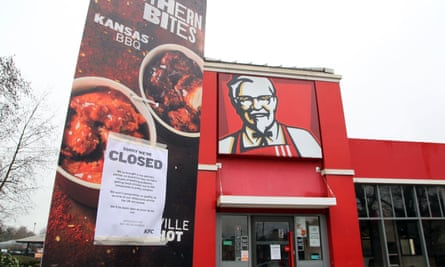
A closed sign outside a KFC restaurant in Ashford, Kent.
Photograph: Gareth Fuller/PA

The supply chain crisis for the KFC closed over half of the company's 900 U.K. in 2018. KFC had switched to a new delivery company, causing their food supply chain to suffer significant disruptions. Many of the stores were forced to close without deliveries of fresh chicken-a transport logistics problem that experts estimate cost KFC up to £ 1Million per day.

However, the fast-food giant graciously and with a sense of humor approached the situation, using social media to respond to questions instantly and honestly. The company has also built a page on its website so that consumers can see which stores are still available. In addition, they continued to pay their employees even though restaurants did not serve clients.

 
4.  Mattel Toys – Product Recall

Mattel, Inc: The Lead Paint Recall | Center For Digital Strategies

Photograph: https://digitalstrategies.tuck.dartmouth.edu/

Like many toy manufacturers, Mattel had occasional product recalls, but was then forced to make a series of toy recalls in 2007149. There were two main causes. Firstly, small magnets inside various toy figures or accessories (such as Batman, Barbie, Doggie Day, Polly Pocket) could fall out and be swallowed or aspirated by young children; if more than one magnet was swallowed, the magnets could then attract each other and cause intestinal perforation or blockage, which could have been fatal.

Secondly, surface paints on various toys and accessories contained excessive levels of lead, which was prohibited under federal law; lead is toxic if ingested by young children and can cause adverse health effects. In the worst cases, some of Mattel’s toys had levels of lead in paint that was 180 times the US Federal limit150. All the affected toys, magnets and lead paint were manufactured in China.

Although the products concerned represented a small fraction of China’s exports, worth more than $1 trillion per year, Chinese officials worried that the US government could use these quality problems to restrict trade. Zheng Xiayou, the head of China’s state food and drug administration over the period 1998 to 2005, was convicted of dereliction of duty and taking bribes from manufacturers of the substandard medicines that had been blamed for several deaths – and was executed on 10 July 2007.


5.     Adidas goes for broke

Adidas global HR head resigns as company tackles diversity issues |  BusinessMirror

Photograph: businessmirror.com

Starting in 1993, Adidas attempted to implement two new management systems at its distribution center in Spartanburg, insisting that the system of Integrated Software Logistics Engineering be ported to fault-tolerant Stratus computers. Adidas ploughed ahead despite the device not being ready. It just didn't work.

The sports brand under shipped by an estimated 80 percent, and it took years to regain its lost market share.

As the above-mentioned businesses have proved, reliable goods and innovative campaigns are essential components of growth, but there is no substitution for a stable and well-performed supply chain after all. We all know products change rapidly in the supply chain. Yeah, some supply chain no-nos were listed here.


Takeaways

Snags are unavoidable therefore damage prevention has to be a key market priority. Running pilots is a must and there are also simulation technologies to test supply chain operations. Being open and attentive to the needs of consumers and working diligently to solve the issue can be an incentive to develop trust and improve client relationships. To scale it is important for businesses to have the proper supply chain infrastructure. This includes structures and a plan for anticipating and projecting demand to proactively satisfy consumer needs -eliminating the requirement for inventory effectively rationing and underpinning high demand markets. There are countless possibilities for any cautionary tale to communicate more with your customer base and entertain new customers. And the correct tools for handling the supply chain will prepare you to leap on opportunities.

 References

https://bloncampus.thehindubusinessline.com/columns/world-view/the-abject-failure-that-is-general-motors/article25624078.ece

https://www.thebci.org/news/supply-chain-failure-closes-more-than-half-of-kfc-fast-food-outlets.html

https://www.autonews.com/article/20020211/SUB/202110807/supplier-failure-hurts-land-rover

https://www.nytimes.com/2007/08/15/business/worldbusiness/15imports.html#:~:text=Mattel%2C%20the%20world's%20largest%20toy,are%20covered%20with%20lead%20paint.

Supply Chain Dominance of China

Supply Chain Dominance of China A “Made in China” label has always been problematic in the U.S. In the early years of globalization, compani...