Hello all, my name is Vikas S Menon and I am a 2nd year MBA student at Amrita school of business. Hope all are doing well. I hope you have read my previous blog. If you haven’t read, type #SCM in search, and you will find me.


The future of shipping looks very
much unmanned. Anything that has high levels of customization, anything that's unpredictable,
that could be done by air. Many startups believe the answer is autonomous
flying cargo drones, that can carry heavy loads and fly long distances.
All around the world, millions of people are benefiting from drones already, and we're just at the tip of the iceberg. The global drone logistics and transportation market accounted for more than 24 million dollars in 2018, and that number is expected to grow to 1.6 billion dollars in 2027.
These drones could be the
disruption needed in a global supply chain that has been largely unchanged
since the 1950's. Getting large shipments of products across large distances is
difficult. That's why Malcolm McLean created the shipping container in 1956. This
standardized the shipping industry and allowed shipping to scale in ways that
weren't possible before.
For a typical product that is being shipped from overseas and then received within the country, that would involve trucking, ocean freights, in some cases we are seeing the emergence of more rail being used as it's becoming a more reliable mode of transportation. But now, with programs like Amazon's one-day shipping, consumers are looking for goods to get to them faster. That means the standard shipping methods – ships and trucks – have to be re-evaluated.
There is a seemingly high demand
for things right away by consumers and that just keeps growing and people
become increasingly impossible over time. What it seems like is the supply
chains, which are wildly complex, are built around the timeliness of air
freight. But the cost per item for air freight is significantly more expensive,
when compared to sea and ground shipping.
Air freight is actually a mode of transportation that has increased dramatically. It's still a small percentage of all freight being moved, but if you look at the percentage change over the years, air freight has been growing much more rapidly. I think a big reason for that is the growth of e-commerce. If you're living in a small village and you want to ship goods and be a part of a global economy, often your freight link is by road or rail and it takes quite some time for your goods to be transmitted around the world. So when we bring autonomy and scale into aviation, every community can be connected with the rest of the world through a airborne freight link.
But The main challenge is volume. You just can't lift as much weight into the air as you can floated along the sea, especially if you're trying to use battery powered vehicles like many of the smaller drones we see today. Current battery technology is incredibly heavy. Volans-i, a drone company that has been working in this space since 2015 created a hybrid vehicle that uses electric power to take off vertically, then standard fuel to fly off horizontally. So, if you build an all-electric vehicle, you have an 85 percent mass fraction on the batteries. So that means you can carry 15 percent the rest of the weight in payload, which doesn't really make sense for cargo delivery. The more volume you carry, the cheaper shipping becomes, even if that means traveling longer distances. Going in from Shanghai as an example, to the United States might take about 28 days by ship, whereas by airplane it'll only take 14 hours. But still, ships are cheaper.
Companies like Volans-i have
already started making deliveries in places like the Bahamas, a particularly
difficult area for deliveries because of the large distances between islands. The
company's goal is to alleviate the shipping strains of high need, expensive
shipping, like when a specific part needs replacing on a production line, and
it needs to be replaced quickly since time is money.
Other companies are trying to
lighten the load of the ever critical last-mile delivery. That's the portion of
the shipping process that gets the product from its last warehouse or shipping
hub to your door, and trying to hasten the delivery of medical supplies and
samples for testing.
Zipline has been delivering
supplies in Rwanda since 2016, Ghana since April of 2019 and is expanding its
service to the U.S. this year. UPS has teamed up with drone startup Matternet
to quickly ship medical supplies from a North Carolina hospital to labs for
testing. I think we can use this type of system to massively improve health
care in the country.
Autonomy brings a whole new set of public concerns, just as we've seen with self-driving cars, because the public has grown to appreciate the safety and the assurance of being able to fly from one place to another. The regulators are hesitant to permit new technologies from entering the airspace until they are really proven satisfactorily. Another big concern when it comes to automation is jobs. There would be this whole workforce needed to be able to manage this drone network.
This technology could help
alleviate some of the worker shortages that the shipping industry is facing. I think
that there is a great opportunity here with unmanned cargo aircraft to start
proving out some of the technologies in a lower-risk environment without people
on board, and these same technologies can eventually be introduced to the
aircraft that we will use for flying around cities to and from work.
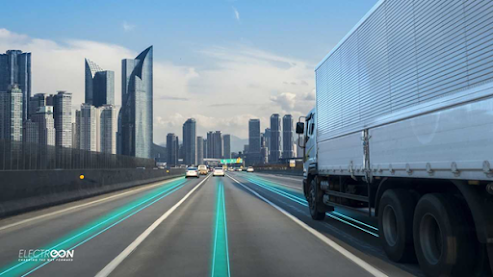
Electric Road System – The Road of the Future
Hi, I’m Priyanka Sunil- A final year MBA student from Amrita School Of Business majoring in Operations and Marketing. Welcome to my progressive learning space for Logistics and Supply Chain Management.
Until some years ago,
there was a belief that electric cars, buses and trucks, both in terms of
efficiency and driving range, were inferior to fuel-powered vehicles. Development
in autonomous technology and related infrastructure has evolved soo much in ways
unimaginable in a span of 20 years. In this autonomous-driving revolution, the road of the future is
likely to become the central nervous system.
The
worldwide Green House Gas emissions must be decreased by 40 percent-70 percent
in order to sustain the global temperature increase below 2 percent and prevent
extreme climate change. As road transport is a big GHG contributor, we will
need to rely on anything other than fossil fuels for our transport needs in
several years. One possible alternative is for our vehicles to run on
electricity supplied along the road. According to the report of the
Intergovernmental Panel on Climate Change, 72% of the 23% of the global
transport sector's total energy-related CO2 emissions are due to road
transport, which is expected to rise by 59% by 2030
Electric Road System-Types
·
Overhead lines: Two conductive lines
are suspended over the road at a height of approximately 5meters to power heavy
commercial vehicles.
·
Conductive track: These are simply
conductive metal tracks installed in or on the surface of a road or sometimes
along the side of the road.
·
Inductive track: These are buried
conductive coils below the surface of the road. An electric current is induced
in a coil on the bottom of the car.
Hybrid trucks consisting of an electromotor taking energy from an
external source, as well as an on-board power source (fuel or energy-based), are
used in these methods to ensure that the trucks have a continuous power source
while they are not connected to the external grid. If the hybrid truck is
fitted with a battery, the ERS and the regenerative braking system will then charge
it.
This does not
necessitate electrification of all highways. Rather, on long stretches of
highways and in busy areas of urban road networks, charging zones will be
included. Since 2016, these systems have been in trial service in Sweden
and Germany on public highways.
Sweden
is leading our way…..!!!
Road transport accounts for one-third of Sweden's
carbon emissions, one-fourth of which is due to heavy freight transport. Sweden
has committed to making a transport sector independent of fossil-fuel vehicles
by 2030 as part of its climate protection strategy.
Sweden debuted the world’s first electrified road near Stockholm.
South Korea and China also have been investing in solar-powered electromagnetic
roads that recharge cars and trucks wirelessly to charge of EV batteries and
reduce carbon emissions.
The
world's first electrified road that uses a flexible arm to charge the batteries
of moving vehicles recently debuted in Sweden. Two kilometers of the rail is
embedded in a road near Stockholm. The road recharges vehicles' batteries as
they move down it. It operates by using a movable arm that transfers the power
from the rails to the vehicle battery by linking the vehicles to two
electrified rails. The ERS decreases emissions of carbon dioxide by up to 90
percent. Even though The electrification of a kilometre of road costs around $1
million, it is 50 times less costly than the installation of an urban tram
line. The strategy is to expand throughout Sweden to help minimise transport
using fossil fuels by 70 percent by 2030
There
are a few other eco-sustainable solutions being used across the globe. South
Korea developed a 12-kilometer asphalt roadway with electric cables in 2013, to
build an electromagnetic field for wireless charging of moving passenger buses,
China is testing a "intelligent highway" to produce electricity using
solar panels to minimise transportation sector emissions.
Over
100 years of electric vehicles
It
was over 100 years ago, that the first electric cars were produced in US and they
controlled the roads until around 1915. There are two methods for powering
vehicles with electricity : stored battery power and direct feeds when in
motion. Both of these techniques are more than 100 years old.
The
challenges of using battery power
Even
the best batteries could only store a
fraction of the energy compared with the energy content of diesel, for example.
This makes driving longer distances more difficult.
Is ERS a better
economic solution?
Current
infrastructure can be exploited by the electrification of roads to reduce
energy use and carbon emissions. Electrified-road transport eliminates fossil
emissions by 80 to 90 percent and is a cost-effective, climate-smart way of
combining the benefits of rail with truck versatility. Due to substantial
reductions in energy usage resulting from the use of powerful electric engines,
operating costs would be minimal. Electricity is also a cleaner, quieter and
less expensive source of energy, compared with diesel.
Reference
https://eroadarlanda.com/need-electrified-roads/
https://www.vti.se/en/news/electric-roads-a-solution-for-the-future/
https://www.engineering.com/AdvancedManufacturing/ArticleID/20157/Electric-Road-Systems.aspx
https://www.sia-partners.com/en/news-and-publications/from-our-experts/electrified-road-freight-transport
Hello everyone, This is Dharunanand R, studying MBA second year from Amrita School of Business, Coimbatore. I would like to share the blog on " How medicines are handled in Freight ?"
Freight forwarding in Pharmaceutical Industry is considered to be similar to that of the ordinary freight in India, as it involves the same and budgets are similar. The stakeholders are very consistently maintaining a good relationship with them to ensure smooth supply.
As per the latest survey, the costs that are spent on packaging and transportation has been increased from 3.5 to 4.5% for a pharma company, since this industry involves the linkage of live of people any non uniformity may cause a damage to millions of people who are dependent for this medicines.

The company should follow good manufacturing practices to ensure quality and integrity for the distribution both internationally and nationally.
Some guidelines to be followed during transportation:
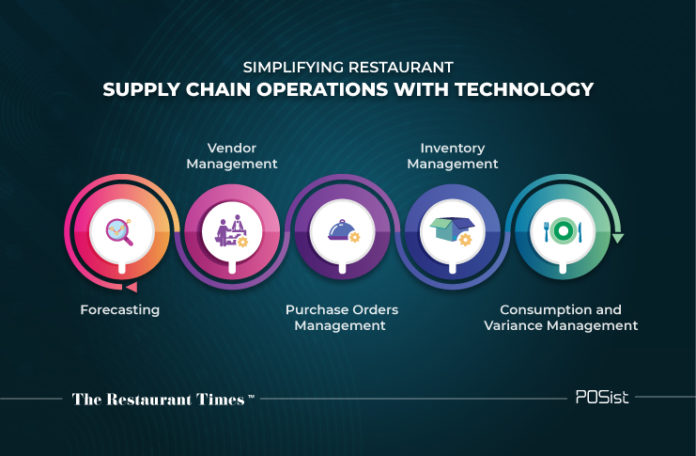
The 5 basic supply chain components in restaurant industry
1. Demand sensing / Forecasting: The restaurant supply chain loop starts with a thorough understanding of market forecasting. This gives the restaurant a holistic approach of adapting its offerings and menu according to consumer demand.
2. Sales management: It is important to find the best vendors in the
restaurant industry to preserve consistency and productivity. It's also essential
to use on-board technologies that helps handle vendors according to quality and performance.
3.Purchase order management: The replenishment of orders differs even
among restaurant chains with several locations, depending on various customer preferences.
One outlet may require a different raw material from the other, or the volumes can
vary.
4. Inventory management: When there is a 'loss of stock' problem, a big source of customer discontent is. Restaurants hold a adequate quantity of all the products or raw materials needed for food production to prevent mismanagement. Effective running of the supply chain means zero waste / failure.
5. Demand and Variation Management: It is important for a restaurant to consider how much inventory is needed for preparing meals, and what the real consumption is. The variation contrasts the real stock (current counted inventory) to the ideal demand (stock value to be present). Consumption control is important to consider whether the employees at the restaurant are following a set of food quality guidelines.
Technology leads to greater communication across the whole supply chain,
allowing a deeper view of the processes. In a single forum, it binds all related
parties participating in the process. All necessary information of the whole order
period can be given with only a single press.
Forecasting
Projection or demand sensing is a crucial step in the overall cycle of supply chain activities in restaurants.
Let's take the example of a food chain where Product X has achieved
the highest revenue, to grasp this. Product Y was the least-selling item over the
menu, however.Product Y did not do well in the industry, amid marketing efforts.
Good X sales have declined owing to a lack in production due to business conditions.
As a result the restaurant's net profits were affected.
This resulted in stock wastage which resulted in higher losses leading to cost-cutting across multiple operations, eventually impacting vendor relationships.
Simplifying Forecasting With Technology – Automated
Forecasting Via Restaurant POS
An automatic forecasting platform offers prediction of the projected
volume of revenue based on consumer demand trends. It's convenient to predict inventory
needs based on the in-hand physical stock in the kitchen and the item-wise selling
from each outlet. Demand sensor systems produce predictions for menu items as well
as for raw material products. Restaurateurs can build exclusive deals for any channel
on the menu items. Often, a proportionate inventory forecast excludes the problems
relevant to raw material ageing.
Vendor management
Vendor management is essential to the extent and complexity of a restaurant
operation.If you're a fine-dine, a QSR line, or a business-grade operation, combining
vendor-partners and monitoring them through technologies is important.
Bad vendor management can lead to:
• Lack of the raw materials provided to a restaurant by the suppliers
• The consistency of the products is degraded due to inadequate storage conditions
• Distribution problem or delay in fulfilment of orders in due time
• High operating costs resulting from economic conditions
Purchase Order Management
Say there's a two outlet restaurant chain that raises buying order depending on the typical criteria. It distributes the product to all of the distributors similarly. It is discovered shortly after an order has been shipped that one outlet is out of supplies, the second outlet has an large inventory and no storage facilities. The chain of restaurants often faces the dilemma of losing out on or getting the wrong piece. The existence of this condition suggests that each outlet 's product needs have not been analysed.
With technologies in place, restaurants can track and evaluate sales-related purchase order criteria. The stock specifications for each outlet can be presented and analysed by restaurateurs. Purchase orders may be generated and delivered directly to the suppliers, depending on the specifications of each outlet. Restaurants use comprehensive statistics on demand and also lets them prepare their shipping. Both information relating to the order, such as status of the shipment, goods ordered, receivables are tracked. That the restaurant can keep a track of its product. Standard consistency is achieved through fair product delivery. All at fixed expense.
Reference : https://www.posist.com/restaurant-times/simplify-supply-chain-restaurants.html
Supply Chain Dominance of China A “Made in China” label has always been problematic in the U.S. In the early years of globalization, compani...