Thursday, September 3, 2020

How technology trends in the supply chain impact businesses


Hello all, I am Vikas S Menon and I am a 2nd year MBA student at Amrita school of business. Hope all are doing well and today’s blog is a sequel to a previous blog I did. If you haven’t read, go through the link below first and read this post.

Link: https://logisticsmatters.blogspot.com/2020/08/eight-technology-trends-in-supply-chain.html


So in the previous blog, I have introduced the Eight technology trends in the supply chain. Now I going to explain what it does and the benefits side when business and customer come into the picture.


Hyper-Automation: Hyper-Automation is connected with the use of emerging technology, including artificial intelligence and machine learning, to increasingly automate work and improve individuals. Hyper-automation ranges to a variety of tools which can be automated, but also applies to the complexity of the automation that is discovered, analyzed, designed, automated, measured, monitored and reassessed. In plain, hyper-automation refers to the combination of automation technologies that exist to improve and expand human capabilities. Hyper-automation takes on an environment of technologically advanced technologies and integrates them to create a new approach, which ensures that low-value processes are executed optimally using automation tools, machine learning, and advanced artificial intelligence so that results can be generated automatically and run efficiently with very little human involvement. Hyper-automation along with humans can create a working environment that is always informed, agile, and able to use information and insights for quick and accurate decision-making. The benefits of hyper-automation will make it possible for the workforce to learn the latest business and market information so that they can perform their roles efficiently. Some of the other benefits of Hyper-automation in business are increased employee satisfaction and motivation, reduced risk, and greater productivity, accurate insights, and increased team collaboration.


Digital supply chain twin: A digital twin is a complete digital version of a physical object or a process in the real world, such as a plant or a supply chain. The benefits of having a digital twin are significant for supply chains. Since it represents the properties, purchases, relationships with third parties, and other operational details of the supply chain, the digital twin allows advanced real-time tracking and adjustment. It offers a comprehensive and in-depth view of the supply chain, enabling the company to rapidly model future scenarios involving changes in production lines, availability of products and personnel, and modification of delivery flows or proactive risk management. The digital twin allows a parallel version of the supply network with the same supply entities, parameters, and financial goals to identify issues and responds to help prescriptive decision-making. This helps management to make fast decisions with a high level of trust in outputs. As industries evaluate how to scale up operations or even move mass production to smaller, more customizable manufacturing, digital twins will help to make supply chain decisions that could allow competitive agility and align with consumer preferences. For example, using digital twins capable of creating improved production schedules with high-speed agility to respond to events in real-time. The Capital intensive industries with complex and highly advanced manufacturing processes are best suited for both supply chain and factory-level digital twins. In the design and investment phase of costly assets, the digital twin could be used to evaluate design possibilities before capital commitments, optimizing productivity and profitability and minimizing risk. The same digital twin can also be used to operate a plant using detailed production planning, that is capable of handling extremely complex and time-dependent procedures that often change with variability in the availability of equipment and people.


Continuous Intelligence: Continuous intelligence is a seamless AI-driven solution that enables businesses to benefit from continuous, useful information from all sources. It digs out trends and patterns that allow the company to link intelligent data with the constant goal of discovering new insights. Supported by Artificial Intelligence, Machine Learning, and the right training data, continuous intelligence can also reduce human bias in the process. CI can help an organization in more than one way I.e. by streamlining data to obtain continuous insights, Increases the IT team efficiency, and strengthen the cybersecurity strategy of the organization.


Supply chain governance and security: Supply Chain Management and Security is part of Supply Chain Management, which focuses on minimizing risk to supply chain, logistics, and transport management systems. The aim is to identify, evaluate, and prioritize risk management activities through structured defenses in an agile manner. This involves a multi-faceted approach to the security of checkpoints, assets, and infrastructures involved in the manufacture of a product. The benefits in having responsible supply chain governance and security system are verifying proper credentials for all participants in the supply chain, completing background checks on all employees, Training employees to identify and resolve supply chain security risks, conducting a frequent risk analysis of supply chain segments, suppliers and stakeholders, educating staff to identify and fix security risks in the supply chain, monitoring at each point of the supply chain including product quality, and promoting the production of more sustainable goods.


Edge computing and analytics: Edge computing is a new and exciting approach to network architecture that helps businesses overcome the limitations imposed by traditional cloud-based networks. Edge computing networks have greatly helped to reduce latency and increase performance. The speed and flexibility of this data handling approach offer an exciting range of choices for organizations. The best benefits of edge computing are Speed (ability to increase network performance by reducing latency), Security (offer a variety of tools clients can use to secure and monitor networks in real-time), Scalability (allowing companies to expand the computing capacity of organization through a combination of IoT devices and edge data centers), Versatility (partnering with local edge data centers - a huge benefit for industries looking to expand network reach into regions with limited connectivity) and Reliability (ensure users retain access to the products and information they need with disruption or by rerouting the data through multiple pathways). The benefits of edge computing in various business are improved healthcare device performance and data management, local & real-time retail data analysis, more vivid augmented reality, accelerated data analytics, smart manufacturing, elimination of excess data, more efficient security systems, real-world data collection, lower operational costs and decreased storage needs, better medical diagnosis and treatment, and customized solutions.


Artificial intelligence: AI is the analysis of data to detect trends and anomalies. AI technology gathers and maintains large quantities of data to generate information that will improve or transform operations efficiently and effectively. Technologies that use AI can analyze and model human behavior by recognizing and simulating behavior patterns. Over time, it can predict needs and make appropriate decisions based on its learning and observations. The ways AI impacts business operations are

  • Improve Customer Communications and Save Costs: AI-driven chatbots enable companies to provide 24/7 customer service by automating customer conversations, making the experience more personal
  • Strengthen Brand Loyalty with Personalization: To provide a customized experience, organizations need to map out individual customer journeys and forecast moments and offers that will improve engagement and drive sales. Customization requires the ability to predict the desires of each consumer. Artificial intelligence can completely automate this process, recognize decision-making trends, and build an identity based on these, and then drive the content that AI has learned is the most appropriate for each individual.
  • Streamline the Hiring Process: In highly competitive fields with a limited pool of talent, AI technology decreases the time required to fill open positions, evaluating candidate applications at a faster pace than humans can. 
  •  Increase Forecasting Accuracy by decreasing human error with the help of AI.
  • AI Unlocks Opportunities: AI would add value to customer service, help create new revenue, and minimize costs.


5G Networks: 5G is the next step I.e. the fifth generation of mobile networks. As well as being much quicker than previous G's, it is also expected to open up several new mobile data use cases and potentially new business opportunities. These include the opportunity to introduce brand new products and services that have not been feasible before, migrate to new markets, and improve productivity. The key features of 5G technology are faster network speed, Lower latency, Greater capacity like coping with high demand applications, Ultra-reliable, Flexible, and improved battery life. The benefits of 5G technology in businesses are increased productivity, remote working, Rural innovation, AR or VR support, Low cost for mobile operators, flexible office spaces, Easier to communicate.


Immersive experience: Immersive technology include virtual reality, augmented reality, and mixed reality, all of which combine the physical and digital worlds to make a special user experience. The seven ways VR, MR, and AR segments are impacting business operation are,

  • Training: Immersive technologies may provide new opportunities to learn; historically, factors ranging from cost to health and safety hindered large-scale adoption or rapid implementation. The key advantage is the low cost and no risk with a high return on investment.
  • Prototyping: The ability to build a virtual prototype easily and cheaply, and to work collaboratively, would revolutionize product creation. The key attributes here are speed and ease of use. Adding these considerations to the timeline for product development opens up a tremendous opportunity to try out concepts that were previously overlooked due to cost, time, or both.
  • Virtual visits: Immersive technology enables the discovery of previously inaccessible environments. Touring factories that do not yet exist, or pursuing a cellular pathway across the human body which learned in textbooks are two perfect examples.
  • Data visualization: Companies use AR to visualize, analyze, and manipulate large data at the workplace. The aim is to increase the toolbox of the data scientist and improve the efficiency and depth of the analysis.
  • Gamification: The entire environment was created in an illustrative style, similar to a graphic novel. Students prefer to hold more information when their learning experience is enjoyable and immersive.

Mumbai's Lunchbox supply chain

Hi, I am Rakesh, Welcome to my blog......

In an era in which many can not picture an effective supply chain working without the advantage of technology, Mumbai India has an example of a compact, just-in-time, 99.99 per cent reliable supply chain working without any technology. Only in the movie Lunchbox, you can see an instance in which a Dabbawala makes a mistake. 

Founded in 1890, today 5,000 dabbawallas serve 200,000 Mumbai customers. This involves 400,000 last mile transactions per day (including returning empty tiffin carriers), with an error rate of 1 in 16 million transactions. This high-reliability rate earned them a six sigma designation and an ISO 9001 accreditation for their efficient supply chain.

This supply chain delivers home-cooked food to the office in time for lunch and then returns the empty tiffin-boxes by the end of the working day. Dabbawallas receive Rs 9000 a month per user and charge Rs 400 a month per user. The dabbawalla supply chain combines baton relay and sortation, hub moves to hub moves, and deliveries to the hub and spoke. Dabbawallas receive tiffin boxes from their client's homes from 8:30 am to 9:30 am. A dabbawala is responsible for 30-35 tiffin boxes in a region. 

From 10:34 to 11:20 am the inbound journey to office workplaces begins. From 11:20 to 12:05 pm unloading is done at the destination station, and another area/building destination sort occurs. By 12:30 – 1:00 pm, all the tiffins get delivered. A similar reverse supply chain is followed between 1:30 pm to 5:30 pm to get empty tiffin boxes back home.

A meticulous coding system is in place to avoid the interchanging of lunchboxes. The lunches are sorted according to where they came from, and where they are intended to go.  Each tiffin is labelled with an alphanumeric code and loaded onto city trains before traversing the city’s maze of over 22 million before being handed off to local dabbawalas who complete the last part of the delivery. After the food is eaten, the tiffins are collected by dabbawalas and make a return trip to their respective homes.
Example of the coding system:
  • BVI: Borivali, a suburb in Mumbai. A pickup station.
  • 9 RC 14: Code for dabbawallas at the destination. This user code is different for each customer
  • RC: Raheja Chambers, name of a building or office at the destination
  • 14: Floor number
  • E: Code for the dabbawalla at the destination railway station.
To make the supply chain efficient the principles followed are:

  • Value Time – Dabbawalls don’t wait for unprepared tiffin boxes for more than 2 minutes; if they do, the downstream supply chain will be adversely affected. If a customer becomes a bottleneck in the supply chain for three consecutive days their services are terminated.
  • Value Customer Service – The shelf life of the lunch boxes is just 4-5 hours if it is not delivered on time food goes waste.
  • Minimal dependence on technology – The dabbawallas are now using Web technology and SMS for orders, but for the most part, this is a manual operation. It relies on manual operations carried out on trains, cycles, wooden carts by barefoot men.
  • High visibility and transparency – The dabbawalla-system ensures that all the dabbawallas understand exactly what is happening and when — to the minute. If certain deadlines and hand-offs are missed, people don’t eat. It’s as simple as that.


Wednesday, September 2, 2020

Dell's Reinvented Supply chain strategy

Welcome back Readers I’m Sivakami - A final year MBA student from Amrita School Of Business majoring in Marketing and operations. I have found my space to explore on the various verticals in the area of  Logistics and supply chain and of course not limited to theories and  empirical studies 😅. So come lets discover on our never ending territory 😇 

As a Supply chain management student it is always fascinating to know how companies design their supply chain strategy to achieve a competitive edge over other rivalries. One such is Dell. Dell has transformed significantly since they pioneered the direct-to-customer model for PCs. So what made Dell achieve competitive advantage is their customer-centricity and lean approach to the supply chain despite threats from rivalries like Apple.

    The most remarkable feature of Dell’s supply chain management is its direct sales model. In fact, it accepts orders directly from the customers, without involving any retailers. Their model helped in accessing the customer needs directly. Based on this data, the brand implemented additional products and services according to customers’ preferences. This made it stand out among other computer hardware manufacturers early on.

    Second factor which led to the brand's success is the reinvention of the supply chain. The company implemented strategies like Global structure instead of regional structure, with three business units, Standardized offers including the most frequently purchased configurations, Segmented model instead of a one-size-fits-all model, Infrastructure that corresponds to the changing needs of the business. Standard yet flexible processes that leverage global partnerships, Customer priorities aligned according to speed, choice and cost. Ready-made, in-stock systems for quick delivery, Optimization of global IT infrastructure. All of these renovations that they made in their supply chain model helped them in segmenting their customers as well. 

Following are the key segments:
  • Customers with specific needs – configurable products
  • Customers that choose the company as a trusted advisor – preconfigured products
  • Customers that value speed – finished goods purchased either directly or through the website
    Accordingly, the brand implemented different supply chains targeting these groups of customers. However, all of the chains were using the same tools, processes and suppliers.

    Dell made sure that each of their suppliers have a manufacturing plant near Dell’s plant. The suppliers should also cooperate with logistics companies that can both deliver the components and ship the customer orders. Finally, the company manages its inventory based on the VMI model, meaning the supplied components are kept on the truck only and taken as needed while the vendor manages the inventory. Dell and its suppliers communicate with each other via an internal website called Value Chain. At this website, the companies can access information about the inventory status within the supply chain as well as get demand and production data.

    To summarize, Dell has been a successful player in the computer hardware market since the very beginning because of its innovative supply chain strategies. Despite the hard times in the early 2000s, its customer-centric model helped Dell remain afloat. Dell reinvented its supply chain according to the changing needs of its target audience. That just goes to show that renewing and improving your supply chain strategy continuously can go a long way. 

Happy Reading from Sivakami :)

Tuesday, September 1, 2020

The Next Gen Warehousing Labor

 Warehousing is seeing a tremendous change due to the influence of technology. Shuttle systems- a compact vehicle used in the warehouse for automatic operations, plays an important role in this. The products now come to the employees rather than they go for it. The demanding tasks of the workers searching for the products in different locations within the warehouse will come to end. Also, the work becomes easier for the workers in physically and also in safety. The twist, bend and reaching of the product is now eliminated using this. During the time of pandemic where social distancing is important, the number of workers need to be on site will also reduce. But also, the skill demands for the workers will also change as they need to know more about the computer technologies. Combination of both human and the technology is needed to for the effective use of the warehousing.

In the near future, supply chain using technologies like robots, autonomous vehicles etc. will be the dominant players. A very important reason for this is the boost in the efficiency of the workers. Technology take care of the tedious and dangerous work that previously an employee needed to do, and make it much easier. Also, seasonal workers are helped to become productive quickly by the autonomous vehicles since they knew the locations of each and every product. Also, the use of wearable helps to improve the productivity of the workers.

Use of automation also enhances the safety of workers and reduces the number of accidents to an extent. This reduces both financial and human injury costs. Since workers lifts only fewer products and those are weightless products the serious injuries become less. This will also help in maintaining social distances. Because of automation employees doesn’t need to come closer.

Automation has also some side effects. Even though automation reduces the employees to walk more, some jobs may require an employee to stand in a place, pick a product and send it. Automation also reduces the number of workers causing unemployment. Skilled workers will be required for the proper usage of this machines, which are rare in a warehousing job.

MCU & Disney showing importance of supply chain through movies

Big Game” Spot | Marvel Studios | Disney+ - YouTube

Hello ladies & gentlemen!

This week we are going to have a look at some interesting supply chain lessons from movies. 

So we shall begin with my favorite on the top of the list,

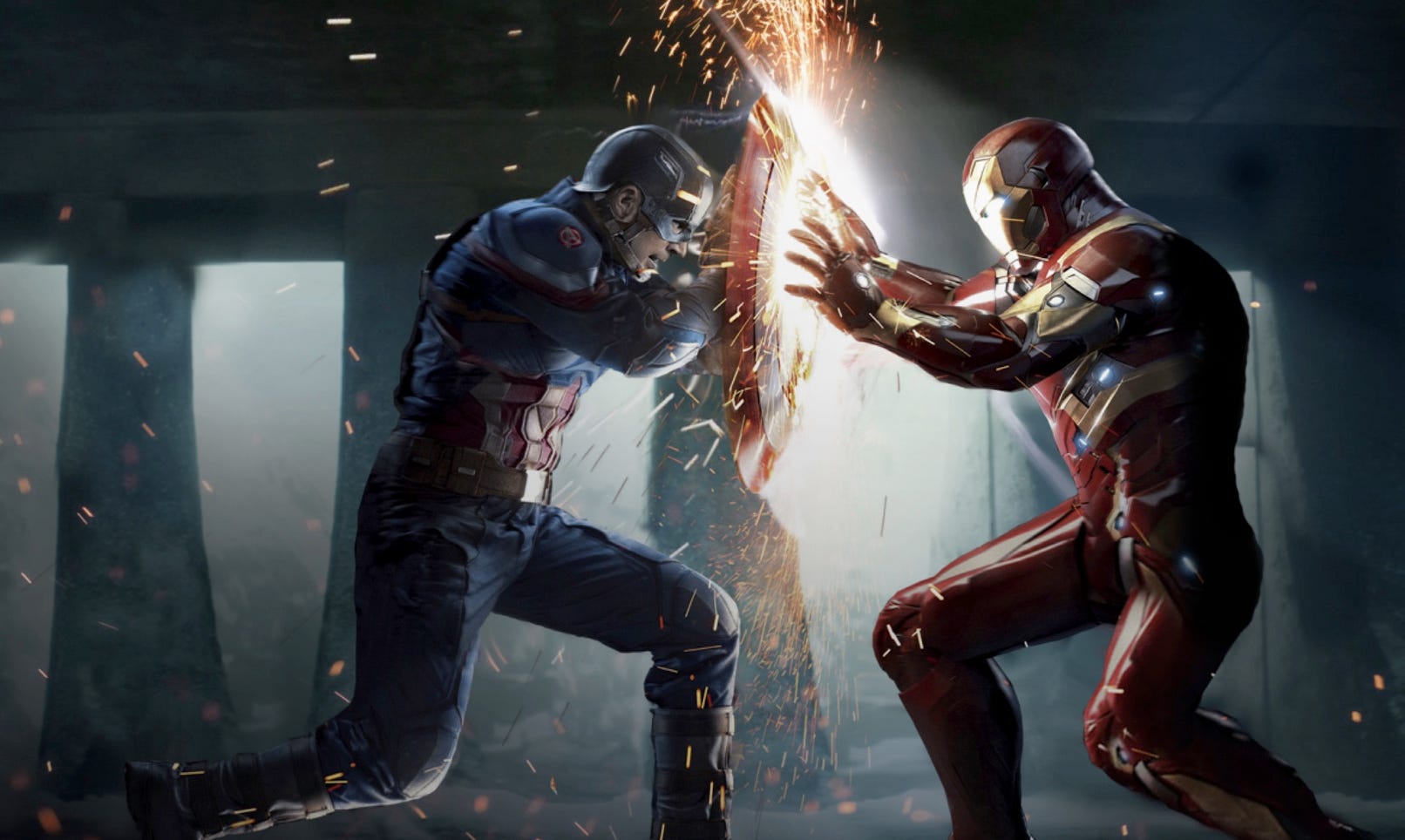
How Captain America: Civil War Set the Stage for Avengers: Endgame | by M S  Rayed | UpThrust.co | Medium

Captain America: Civil War

Generally in an organization, you find departments competing against each other to achieve their own strategic goals. If you can think of it then that's what you have experienced watching this movie. The most iconic scene of this movie is the airport fight scene where heroes take sides with Captain America and Iron man.
The sales dept is headed by Iron man trying to force his views on the team supply chain or team captain America. The supply chain team knows exactly how to minimize costs, deliver products on time, and optimize the business process, like how cap knew about super soldiers from bucky who are about to be released from Siberia. After a long fight among the heroes, Iron man finally realizes that he should have listened to Cap (supply chain professional). 

Lesson is that the Sales dept should trust its supply chain professionals. "As the old man(cap) says, together".


Deadpool and Marvel – Could Ryan Reynolds work in the MCU?

Deadpool

The most important part of any supply chain is its ability to recover from any crisis and continue optimizing. If you think of someone who can never die and keeps recovering, and if you are a marvel fan, then Deadpool should be the 1st one that should come to your mind. The supplier puts a bullet to your head, try and find a new supplier. Customers stab a knife in the chest, move on, and optimize your delivery and product quality. 

No matter what, at the end make sure the customer gets quality products while keeping the profits running, like Stan Lee and Deadpool franchise.


This Moana Theory Will Make You Question the Entire Disney Movie

Moana

The supply chain is back-ordered and Moana travels to far off places to ensure optimized sourcing and supplier engagement can get the company back on track. Along the way, she teams up with a demi-god, fights pirate coconuts, and becomes chief supply chain officer. 
Moana is a supply chain parable about ensuring they can deliver what the customers want (island’s fish and plant life is dying!) when they want it (now) and spend as little money as possible getting that done (one negotiation with a stubborn supplier, or a lava demon, was all it took). 

Zootopia' review - Business Insider

Zootopia

This movie is one such that shows the importance of supply chain in & out of the movie. A supply chain movie is one that delivers its customers (us) what we want (entertainment) when we want it (when we’re watching the said movie) and do that by spending as little money as possible (and while Zootopia cost around $150 million to make, it grossed over a billion dollars worldwide & we’d all take a cost of goods that is 15% of our revenue). So, while Zootopia meets the standard supply chain movie definition, it’s also that rare movie that actually shows a working supply chain. The storyline clearly tells how Judy Hopps struggles hard to save the city (company) as a ZPD officer (Supply chain professional) gets in partnership with a fox (supplier) and delivers what the customer wants. But not trusting the supplier causes trouble and later she realizes and joins hand with the fox to solve the most challenging problem and emerges successful. This success is not just for the company but also for the supplier (fox).

If you have not watched these movies, I would advise you to watch them, as they tell us a lot more stories than the one they are intended for.

See you later! Until then Adios, Amigo!

-Varadharaju R

Supply Chain Dominance of China

Supply Chain Dominance of China A “Made in China” label has always been problematic in the U.S. In the early years of globalization, compani...